Now, that may seem like common sense. After-all, a single comic book is lucky to sell 100,000 and who cares what some fat, sweaty guy who plays Dungeons & Dragons thinks, right? But are the tastes of people who read comics and weigh in on them on the internet that different from those of everyone else?
Besides, for something so "nerdy," it seems like there's an awful lot of people who play poser to it. After-all, don't graphic novels that have been on bookshelves long enough eventually turn a pretty decent run?
In 1989, Warner Bros. released Batman which was a dream come true for Batman fans who had been reading him starting in the 1970s, when his adventures took on a more gloomy tone, and the deeds of his enemies became more heinous. Oh, it took many liberties with the stories, but at the time, many fans felt it was just great to see a movie like this, which became the biggest movie of the year in the United States.
1992 saw the inevitable sequel, but some fans weren't happy. They could no longer overlook Batman's willingness to kill, and the monstrous look of the Penguin, so different from the comics. There were script problems from day one as well. And yet, many other fans thought it was terrific, however, many parents had taken their kids to see it not realizing that there were elements of the film that children would find scary and depressing. It was only the third-biggest movie of the year in America.
To remedy this, Warner Bros. released Batman Forever, which replaced the gloomy German-expression inspired look of the first two with a more exciting music-video like action flick. The villains were as comedic as in the 1960s Batman TV show--which, mind you, was a comedy in the vain of Get Smart and fans were divided over the inclusion of Robin. Consensus among fans was that the movie was a major disappointment.
Warner Bros. laughed all the way to the bank, however, as it became even more successful than Batman Returns (it was the second biggest film of the year) and continued on with Batman & Robin which was one of the most universally-decried films of the last twenty years. While it opened fairly strong, the film was ultimately considered a disappointment, if not a flop. While a low-budget Spawn movie did respectable, if unremarkable, business at the box office, and the Men in Black movie was an enormous hit, but it seemed that Batman's days of box office supremacy were over as the film came in 12th in the domestic box office.
Had Warner Bros. learned their lesson? Before we had a chance to find out, three years went by before 20th Century Fox released X-Men. Now, this is a strange case because the idea of the team as being feared and hated by ordinary humans was kept, as for a lot of the drama of the comics. It also featured Patrick Stewart as Professor X, who had been Wizard Magazine's choice for the role since their first fantasy cast in 1994. Inevitably, there were characters who were altered quite a bit to support the story, and the costumes were pretty much unrecognizable.
The film did well, but was nowhere near what the first three Batman films had been. A year later, Warner Bros had put Superman back on the small screen in the form of Smallville, which covered his high school years, wherein he slowly learned to use his powers and deal with the typical problems of a teenager in Kansas. The show was a success, but with his costume nowhere to be seen, it was almost more like an urban fantasy (or, well, rural fantasy) version of the character as X-Men had been more of a straightforward sci-fi/adventure film in the vain of Star Trek.
 |
| The cast of Smallville when the series began. © 2001 Warner Bros. |
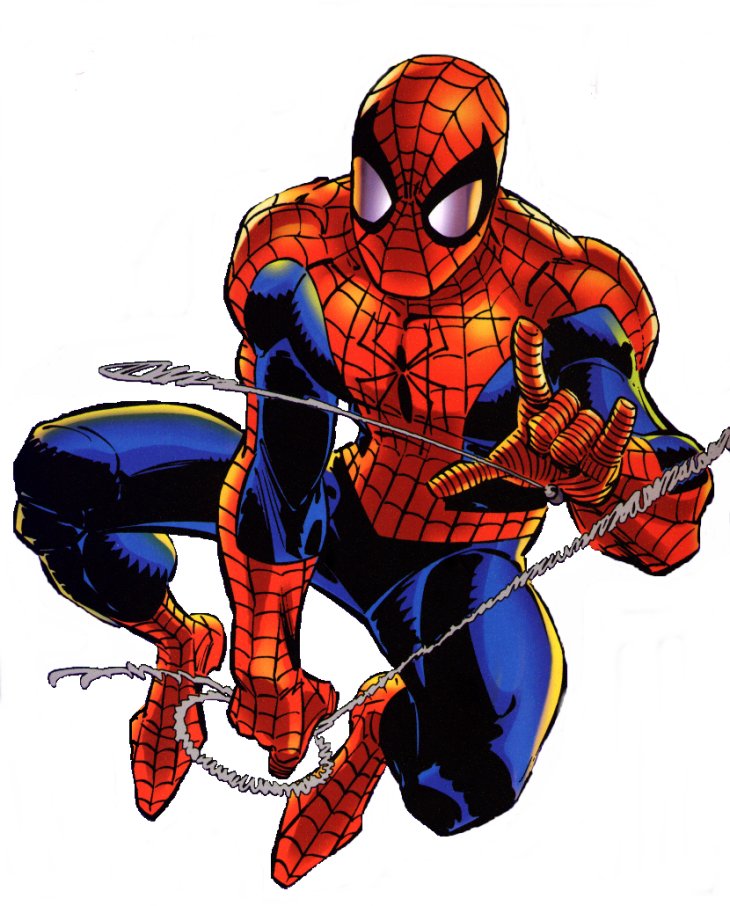
That may have held true of Columbia's 2002 blockbuster Spider-Man, but with its box office earnings, it just didn't seem to matter. While there were still small changes to the mythos (the most talked about of which was Spider-Man's webs coming from his actual wrists instead of gizmos placed on them), his costume was much as it had been in the comics, with the main difference being in texture, and the idea of a teenager with coming-of-age problems and who fought crime because he had failed to prevent the killing of his uncle when he had the chance remained.
There were fans who nitpicked the changes as minor as they were. There were also those who felt it wasn't the best film it could be in general. But for the most part, it was considered a blessing from fans.
In the meantime, Smallville kept going strong, while a sort-of Batman spin-off Birds of Prey only lasted one season with many viewers complaining that it was confusing. Welcome to our world.
 |
| I'm Facebook friends with Dina Meyer, and I thought Ashley Scott was incredibly nice when I met her at SDCC. © 2002 Warner Bros. |
During the next two years, X2 (why they couldn't call this otherwise fine film X-Men 2 is beyond me) and Spider-Man 2 did great business at the box office, each about as faithful as their predecessor. On the other hand, Daredevil was a mediocre hit, and The Punisher more-or-less broke even, while The Incredible Hulk was basically a high-profile flop. All of these films were fairly faithful. It may not have helped that the independent comic-based League of Extraordinary Gentlemen--a tepid film that really would have been lame even for the '90s--was also something of a flop in the domestic box office.
However, none of these films did quite as bad as Catwoman, starring Halle Berry in the title role. I cannot comment on this film in that I haven't seen it, but in addition to terrible reviews, there didn't appear to be any fidelity to the source material. They changed her secret identity, and I'm under the impression she had cat-powers. I'm also under the impression, she's a straight-up hero (if maybe an anti-hero) as opposed to the burglar with a heart of gold as seen in the comics and cartoons.
Oh shit, almost forgot, here's the Spider-Man 2 trailer.
Despite what Catwoman implied, however, Warner Bros. had been listening to Bat-fans. The next year Batman Begins was released. Fans had been clamoring for a "Year One" type film since almost immediately after the release of Batman & Robin. The film not only returned Batman to the darkness of the past (where he'd been in the comics all along), but also stayed somewhat closer to the source material. The film made Joe Chill the killer of Bruce's parents as he had been in the comics, and used the idea that it was a mob-hit made to look like a robbery--a product, ironically enough, of the '50s comics. We also saw Bruce training with Rah's al Guhl, a major character in the comics and in the animated series, but who had never appeared in live-action. The film even ended with a tease for the Joker, that was straight out of Batman: Year One.
That's not to say the film never tarried from the source material. They still had a black, armored costume and the love-interest was an original character; but compared to Batman & Robin, not only was this film practically a work of utter genius, it was also practically verbatim what was in the comics.
And yet, while the film faired mostly well with critics, some felt it was tedious and that too much attention was devoted to things like the creation of Batman's gadgets. In box office figures, the film did well, but didn't quite restore Batman to his early '90s glory days. What I will say is that the film had a certain feel to it like it was faithful to the comics without trying to rest on the laurels of being based on them. This sort-of takes the X-Men formula to a higher level. It's its own movie, and I really think that it was the greatest superhero film of all up to that point, though Spider-Man 2 and Superman: the Movie are strong contenders as well.
The same year, a Fantastic Four movie hit the screen. It was reasonably faithful, with the predictable watering-down of the main villain. It just… sucked. But it wasn't exactly a flop.
By this point, it's obvious that filmmakers and studios saw the value in fidelity to the source material as well as seeking the opinions of the base. But does that mean they started giving a rat's ass about what fans think?
Well, I think we've gone long enough without defining the word "fan." A fan doesn't necessarily mean someone who's at the comic book store every Wednesday
X-Men: The Last Stand or whatever the third film stepped away from treating the series as straight sci-fi/adventure and went with something with more of a superhero feel, even if the costumes were, for the most part, what they had been in the earlier films. It still took liberties with the characters--Cyclops' death being a case-in-point--but it was also just incredibly cheesy. That was the conciseness among fans, though the film did well at the box office.
But that summer came the most divisive film in superhero history.
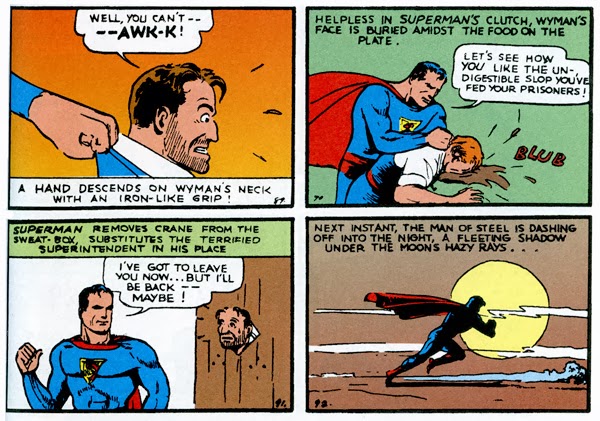
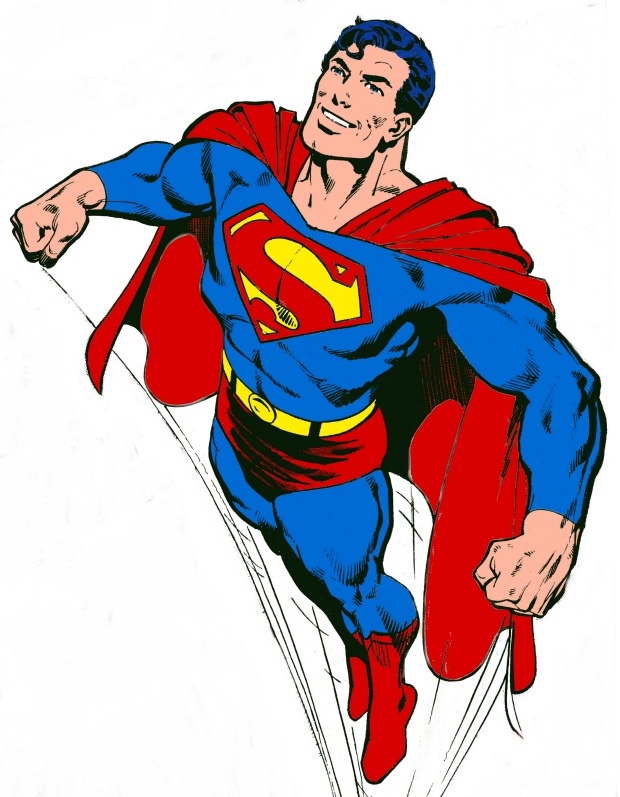
Superman Returns is a movie I cannot describe in objective terms, because it just pissed me off that royally. I'll try: it was a broad-strokes sequel to the Christopher Reeve film (according to its press, it followed the first two but ignored the later two) and the idea was that Superman left for five years because some scientist discovered evidence that Krypton might not have blown up. Right off the bat, this premise is contrived at best, and self-serving on his part at worst. But anyway, he returns to find that Lois had a son and has a boyfriend. Lo and behold, he discovers that he's the child's true father. Oh, and there's some bullshit about how Lex tried to use the crystals from the Fortress of Solitude to… um… turn North America into that so people would pay to live there?
This offensive, nonsensical gibberish brought in $200 million at the U.S. box office with an additional $191 million overseas. It garnered a 77% on Rotten Tomatoes as well. These numbers aren't that bad, but when you look at the $270 million budget (whether or not that includes prior attempts to create a Superman film) and the aim of critical prestige, it really wasn't that big a deal. Yet, many fans love it.
Why?
Well, because: it said it was faithful. How did it manage that? Well, the film went into pre-production soon after the deaths of Marlon Brando and Christopher Reeve, the stars of 1978's Superman: the Movie which began the age of blockbuster superhero films. It was produced by Alexander and Ilya Salkind, the later of whom was a big fan. Warner Bros. distributed and largely financed it, but it was basically a Salkind production, so the corporate era really began with Batman.
That's why it's easy to say that blaring the John Williams music enough, finding a guy that resembles Christopher Reeve enough, and quoting enough lines from that classic of classics was "faithful" even if the plot was out-of-character shit. At the time, Superman: the Movie was considered more-or-less the granddaddy of superhero films, despite some infidelities and important reboots and events in the comics since it came out. Yet, there was a divide between "comic book fans" and "Donner fans," in the years leading up to Man of Steel. And I hold Superman Returns director Bryan Singer--who had masterfully helmed the first two X-Men films--as the prime suspect.
 Now, take another look at the box office figures and critical response. Does this sound worthy of a sequel? I mean, it's more-or-less what Batman Begins took in, albeit on a much larger budget. Bear in mind also that Batman's comics have also sold more in general, with some major exceptions, and that Batman's prior films were more recent and more profitable than Superman's, even adjusting for inflation (Superman IV was an unmitigated disaster at the box office, and III was a modest hit) and Bats had done better in TV animation and far better in video games--in fact, Superman's rep in the world of video games was considered terrible.
However, Superman did still have a feather in his cap, which was that he had always been successful in live-action TV. The Adventures of Superman was a nugget of the golden age of television proving there was life before Reeve, Superboy was a cult favorite, Lois & Clark was a respectable prime-time hit for ABC, and Smallville was still going strong when Superman Returns came out. Plus, the first two Christopher Reeve films had been huge hits, as long ago as they were released, and the 1992 Death of Superman arc, and its sequel Reign of the Supermen (I'm trying to explain it in terms a studio board member would understand) were big-sellers, with the death issue itself selling about three million copies.
Meanwhile, many fans felt Superman Returns was a great accomplishment and embodied everything they'd wanted in a Superman film--especially after years of rumors and leaks of a very unfaithful film in the late '90s and a slight improvement in the early '00s--but many others, including myself, flatly didn't. Some like me were offended by the scenario. There would be no way to follow it up without making Superman a deadbeat dad at-least at the beginning of the movie. Others felt the original films were too old anyway, and hadn't aged as well as some of their contemporaries. I could see where that was coming from, but I feel that if the Star Wars films could have prequels, Superman could have sequels if they loosely adapted more recent stories.
I'm not sure, but I think D.C. was trying to test the waters when they released Superman: Doomsday, the first in a line of animated films based directly on stories from the comics, and with no ties to any other animated or live-action projects. I really hated Superman: Doomsday, but the next one--Justice League: New Frontier--was a gem, and one day, I'll review them in greater detail; but today, I'm here to talk about theatrical releases.
2007 was not a great year for superhero films. While in the U.S. box office, Spider-Man 3 reigned supreme, Ghost Rider and Fantastic Four: Rise of the Silver Surfer barely covered costs. Movies based on non-superhero comics were also coming into the fray. A CG-animated Teenage Mutant Ninja Turtles film aimed low with a $34 million budget, but hit its mark with $54 million domestic. 300 was a surprise hit and marked Zack Snyder's entry into the arena of comic book adaptations. But it was Michael Bay's Transfomers, which we can call a comic book adaptation because the first fiction for the characters was the Marvel comics, was a tremendous hit.
Back to Spider-Man 3, though: it adapted the symbiote costume saga and the advent of Venom with a reasonable amount of fidelity… but the role of Eddie Brock was miswritten and miscast. Bryce Dallas Howard was good as Gwen Stacy, but the role of the character was unlike in the comics and they seemed to be using her for every moment they needed a female of childbearing age who wasn't Mary Jane. The Sandman story was good, and he made for the perfect foe for Spider-Man in the living costume; but while the story of him being Uncle Ben's true killer was almost like a retroactive Batman-esque "have the villain kill the parents" moment. But more importantly, the symbiote isn't well set up or explained, the scene where "dark spidey" goes nuts in a coffee shop is beyond lame, and the special effects were just a little behind the times.
In other words, fans generally acknowledged that it was faithful enough, but it still sucked.
The following year, however, superhero films turned a page.
When that trailer hit… we knew a new era had begun.
 |
| © 2008 Marvel Entertainment |
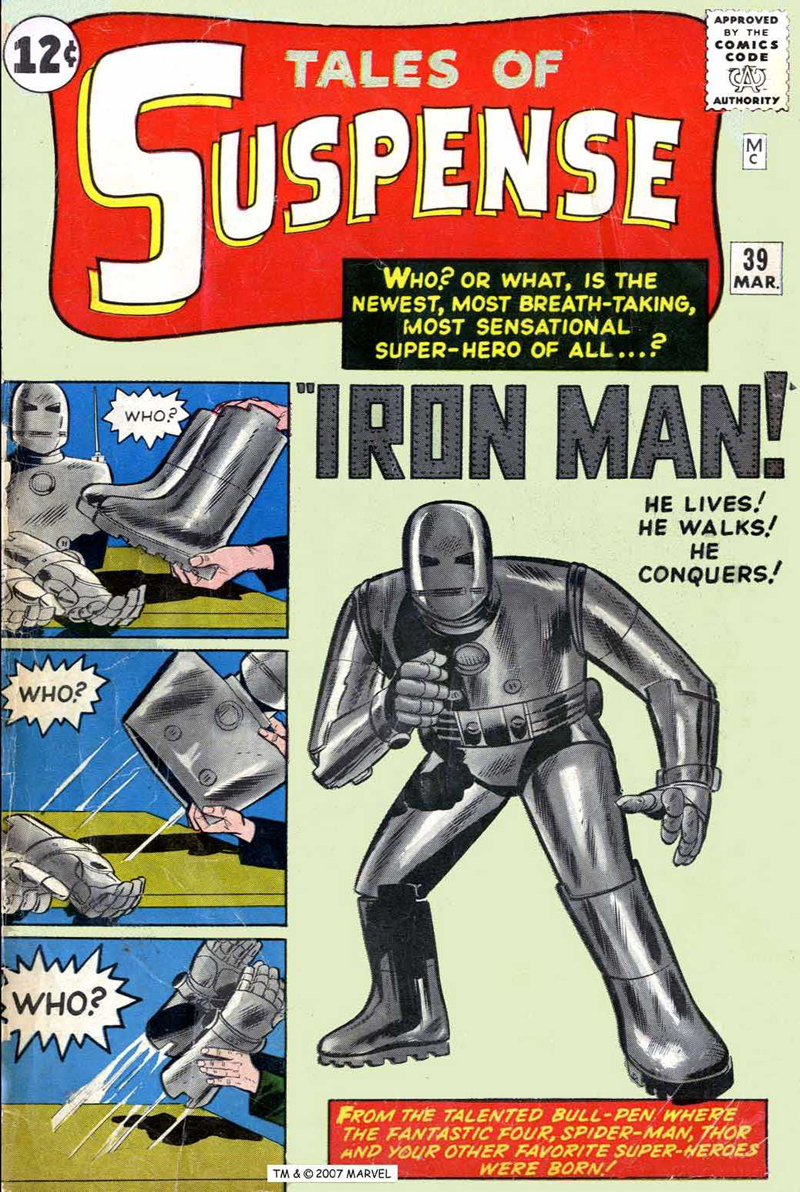
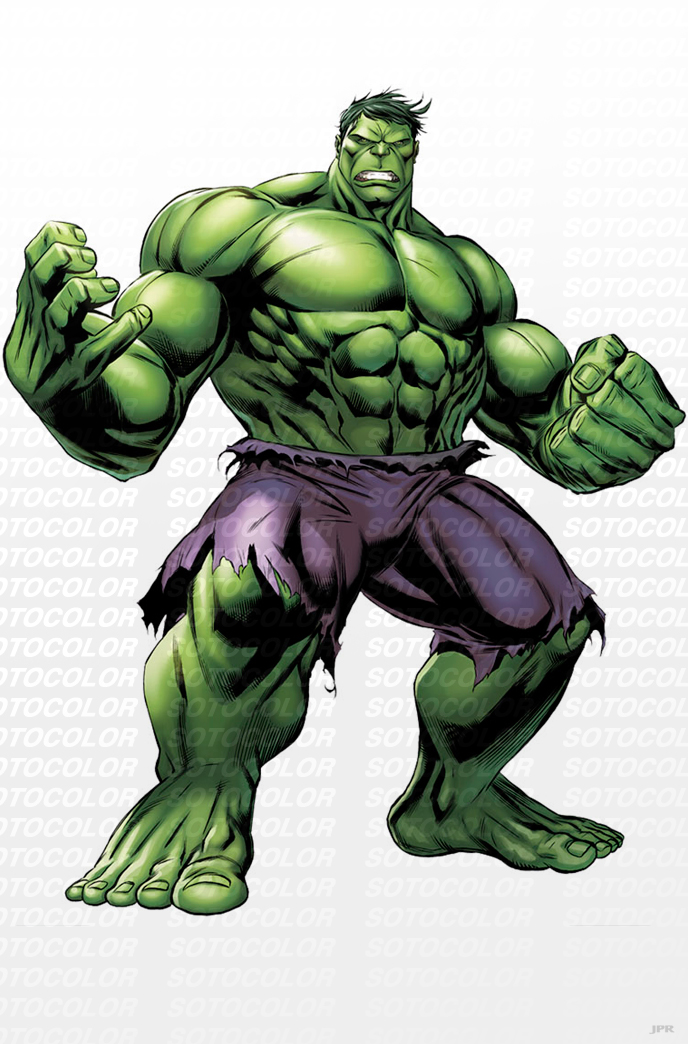
Later that year, Tony Stark appeared again The Incredible Hulk, a film that was marketed as a reboot to the 2003 disappointment that was Hulk, and yet, seems to almost take up where the last film left off (Banner is in Brazil) and don't devote much time to the origin, however they do provide a new origin in a brief flashback and explain that it was part of an experiment to replicate the super soldier serum from World War II. Also, there was a new cast, which sold the idea that it was a reboot, but to moviegoers unimpressed by the first film or unfamiliar with the Marvel Studios plan, it wasn't a big deal. This film didn't really do much better than its predecessor, and the big problem remained that the CG Hulk wasn't convincing enough. By that point, however, Iron Man--a superhero who was largely unknown outside of comics and video games--had made his mark, even if the hero who had been Marvel's biggest hero in the late '70s/early '80s (unless you count the Star Wars characters) was clearly not the draw he used to be.
By the middle of July, though, the disappointment of the Hulk movie didn't matter. Batman Begins had built up a following on DVD, and critics were raving about the performance of Heath Ledger, who had died since the film wrapped up shooting. Fans' early reactions to stills from the film was a bit tepid in some cases, as the Joker bore scant resemblance to the comics and there was division over the decision to simply title it The Dark Knight; but by the time the film was on the way to theaters, nobody could hide their curiosity.
The Dark Knight quickly became one of the biggest films of all time, with critical response through the roof and Oscar buzz (and an eventual win) for Ledger. It was the biggest movie of the year, and until Avatar won out, the entire decade.
 While the plot of The Dark Knight is not without its influence from the comics, nor is it something that couldn't happen in the books (except, arguably, the ending) it wasn't a direct adaptation. Fans can debate whether the Joker was ultimately more similar to the comics or less than the Jack Nicholson version, and the inclusion of the Wayne Foundations (which owed itself to the comics of the early '70s) was probably neat for some fans but lost on others. One of the main differences between Superman & Batman vs. most of the Marvel stable, is that these two heroes have been in several influential films and TV shows, and rebooted several times in the comics; while the Marvel bunch has seldom been in live-action films of note (the '70s Hulk TV show is a major exception) and the comics were rarely rebooted, notwithstanding Ultimate Marvel. Even the animated series' tend to be more-or-less direct adaptations of certain stories, while D.C. animation has tended to add its own creations into the mix (compare Justice League Unlimited and Avengers: Earth's Mightiest Heroes).
2008 marked a new era because it was obvious that a couple of very different superhero films could come out and be the top two films of the year. It also founded the idea that Marvel's films (20th Century Fox's had a more playful, colorful style while Warner Bros.' films based on D.C. heroes tended to try for more of a "realistic" style. Which is "better" has been the subject of bitter debate among fans, and it's these two films that have set the discussion.
There was also a Punisher reboot that year… but I never saw it and don't care.
The following year, 20th Century Fox released X-Men Origins: Wolverine, which leaked early, and garnered negative press there from. Despite being Fox's most faithful X-Men film to date, it was not well-regarded, but Fox soldiered in the years to come and the box office returns were fair.
Less commercially successful was Watchmen, an adaptation of the most acclaimed miniseries-cum-graphic novel of all time. The film took some liberties, mostly with the ending and the costumes. In my humble opinion, some of the redesigned costumes were improvements and if anything, some of the revisionist history was probably confusing to less-informed moviegoers (e.g. Nixon still being president in 1985). In my humble opinion, the film was very faithful, but it seemed like a lot of fans were upset about what changes were made, and incredibly, some fans even criticized the more incidental moments (the old man and kid at the comic book shop) which is to say that this is simply one of those films where the stereotype of overzealous fans nitpicking minor changes was demonstrable.
Was this a case of a movie studio and filmmaker not listening to fans or fans expecting something not in the cards? Bear in mind that until after the film came out, Watchmen was a completely self-contained story that took place outside of the D.C. Universe and had no prequel, sequel or spin-off of any kind.
 |
| This was enough to make me want to see the G.I. Joe movie. © 2008 Paramount |
There was also a film called Avatar that became the biggest film ever. But it wasn't based on anything, so we don't need to talk about it.
Meanwhile, a sequel to Superman Returns had been scheduled for 2009, but nothing seemed to be happening. Superman Returns action figures with a Man of Steel logo appeared on the shelves of Target, and the presumptive name of the sequel was indeed Man of Steel, but not one frame of footage appeared to have been filmed. Had the movie been cancelled?
Many fans sure wanted it to be cancelled, but again, many didn't. However it was increasingly obvious that those who did want a reboot tended to be either non-fans, or fans of comics beginning in 1986, following Crisis on Infinite Earths and the reboot miniseries Man of Steel; while those who favored the earlier "pre-Crisis" comics or the Christopher Reeve films wanted a sequel. If Warner Bros. was indeed listening, it had a choice to make, and it looks like they did as early as April 22.
Perhaps this quote from Jeff Robinov in a 2008 interview with the Wall Street Journal sheds some light on this subject: "we're going to try to go dark to the extent that the characters will allow it." In that interview, he said they had been disappointed in Superman Returns and that they'd planned to "reintroduce" the character, although it wasn't set in stone. Still: to that point, there had been little, if anything, to suggest that a reboot was in the offering.
Moving on to 2010, Iron Man 2 hit theaters. By this time, fans were used to sequels that improved upon the first outing: X2, Spider-Man 2, The Dark Knight, and in some people's opinion, Superman II and Batman Returns. This time, however, there was a disconnect. Had Iron Man 2 been a faithful film that managed to excite and tell a great story? Or did it get bogged down with in-jokes and meandering plot threads? Most importantly, was it getting people excited about the upcoming Avengers film, or did the setup get in the way of a good story?
At this point, the later seems to be the more common opinion, though at the time, the excitement was still bubbling for the big crossover.
Iron Man 2 was the only big superhero film of 2010, though Warners put out a film about the western D.C. Comics character Jonah Hex, which faired very poorly. Iron Man 2 was the third biggest film of the year showing that he was still going strong. In my humble opinion, the film may have some rather huge flaws, but it was certainly the type of film many fans had been hoping for. They just should have put more effort into creating an honestly-good film instead of a celebrity pajama party.
By this point, a reboot had been announced, not of Superman, but of Spider-Man, whose massive success at the box office and fidelity to source material had been an inspiration to Hollywood for nearly a decade. It seemed odd, since Spider-Man 3 had done well financially, and even the internal politics (director Sam Raimi's falling out with Columbia/Sony and star Tobey Maguire's leaving apparently out of loyalty) didn't seem like the series needed a reboot. But the decision had been made.
The next year saw the release of four mainstream superhero films, all trying to be at-least somewhat faithful. Thor was the first one out of the gate. While the film was mostly popular and got good enough ratings, influential critic Roger Ebert gave the film a scathing critique. Ebert's no snob by the way. For my money, the film was okay, but nothing special. My knowledge of early Thor comics is limited and my knowledge of later Thor comics is nonexistent, so all I will say is that originally he had a secret identity in Don Blake, a handicapped doctor whose cane turned into the hammer of Thor and he turned into the deity; yet, this is not covered in the film, although there's a brief mention of someone named Don Blake.
X-Men: First Class served as proof that Fox was trying to get a little more faithful to source material, but they were still off and had no choice but to be off because of how their "universe" was structured. The film had elements of a '60s spy thriller and even managed to incorporate a real-life event (the Cuban Missile Crisis) into the narrative. It had its flaws, but I actually recommend it as something that tried to be as faithful as it could be, mostly using unfamiliar characters, with new actors as the younger Charles Xavier and Magneto, both of whom will return in Days of Future Past along with their older counterparts.
But the biggest disappointment of the year was Warner's D.C. adaptation Green Lantern which I'm honestly afraid to talk about. I said something about it being a mediocre film and someone excoriated me as this fanboy who just wants everything to be 100% like the comics. Then, about a year later, I said it was fairly generic, but that I didn't think it was any worse than Iron Man 2 or Thor and said I was just a D.C. fanboy who had no objectivity.
Anyway, I didn't see much in the way of infidelity given my narrow familiarity with Green Lantern. From what most people said, he was too cocky and irresponsible, which was inconsistent with Hal Jordan's personality. My problem is that it was just generic and didn't have much going for it, with a character who should have been interesting visually. There's also too much emphasis on the love story and not enough on what could have been a fascinating look at this intergalactic authority. For a better film, check out the animated Green Lantern: First Flight.
Now, at some point, D.C. seemed to hope that Green Lantern would become their hero that just suddenly gained a new popularity like Iron Man, and be their third--or even second--most popular superhero. Yet, it just was not to be. The movie does serve as food for thought, however: if this had the Marvel logo on at the beginning and tied in with another superhero, would it have done better?
Thankfully, the final superhero movie of that summer was awesome and faithful to the comics. Captain America: the First Avenger followed the title hero from his origin as a young private who volunteers for an army experiment to grow bigger, stronger, faster, etc. to his seeming demise in the frigid sea with the film ending in modern times as we get a preview of the Avengers film after the credits.
There are scenes taken virtually verbatim from Ultimate Origins and yet, the film feels fresh, almost like Marvel's stab at an Indiana Jones type of adventure. The cast is incredible and while the story isn't gobsmackingly original, it is a thrilling adventure and ode to the most important period in superhero history.
The following year was something of the year of the superheroes. The Avengers was the biggest movie of the year. No, it's not 100% faithful to the comic book. In order for that to be the case, Cap would have to appear either toward the end, or not at all. Plus, you'd have to swap out Hawkeye and Black Widow for Ant/Giant Man and Wasp. But for all the razzle-dazzle, references to comics, the fact that it had basically the same villain as in The Avengers #1 49 years earlier, and that a plethora of other films lead up to it, it's pretty damn faithful if you ask me.
Not only that, but it was produced by a comic book company that had become a movie company. That's the key: Marvel had been producing the Iron Man films, and all other films that lead up to this one. There's not much to talk about as far as the plot goes, but whatever.
Later that summer, the Spider-Man reboot came into fruition. This time, the backstory of Peter's mother and father had more to do with it and Gwen Stacey (the love-interest in late '60s/early '70s comics) was written much as she had been in the comics, rather than the catch-all female of Spider-Man 3. Spider-Man's web-shooters returned, rather than having given Peter the power to spin webs on his own--one of the few controversial liberties taken with the Raimi films--and the costume was changed to something still recognizable, but in my opinion, cheesier. I'm glad to see they've essentially returned to the classic costume in the upcoming film.
While I think The Amazing Spider-Man was ultimately a better film than its predecessor, it isn't such a vast improvement that it warranted making a reboot just ten years after the original. It is only slightly more serious and slightly darker. Both versions depend on Peter and Ben having a heated argument before Ben is killed to ratchet up the guilt, and while the idea that Peter goes on a manhunt to find the killer which is never resolved is an interesting twist, it just never seemed like this reboot was born out of anything but inside baseball.
Incidentally, Sony's other top franchise (I hate that word) returned that year, surprisingly out-earning Spidey with Skyfall, the third film to feature Daniel Craig as James Bond. Many people were confused about the timeline with respect to his initial outing, Casino Royale (it took place when Bond was in training, but it was still the Judi Dench version of M, whose hiring was a major hurdle for Bond in Goldeneye because he had to… *gasp*… take orders from a woman), but Skyfall actually seemed to be having fun with the idea that there's no solid timeline for Bond.
I don't think we can look forward to that kind of artsy-fartsy approach with Spider-Man, but time will tell. In the meantime, it did well at the box office, but was only the seventh biggest film (the first Spidey to not be #1 or 2) in the yearly box office and came in well under $300 million, unlike the others.
Then, of course, came The Dark Knight Rises: the third in what's known as the Dark Knight Trilogy. Where the first movie was quite faithful and the second one was something that could happen in a Batman comic, this one throws it out the window, catching up with Bruce long after he's hung up the cape after the events of the previous film. He returns (with a flying Batmobile) to do battle with Bane. Yes, the part where Bane snaps his back is derived from Knightfall, but the rest of the film is devoid of resemblance to the comics. I won't spoil it, but let's just say there's a reason they've introduced a new Batman to join Superman in his upcoming film, despite the first teaser for the flick being shown along with The Dark Knight Rises.
It may sound like I'm saying that TDKR was written without fans in mind, but by this point, a veritable religion had grown around these films, and Warners had put the man behind them in charge of kickstarting their oldest and debatably next-most-popular superhero.
There were nods to the comics, and ultimately, it played like a high-concept Elseworlds graphic novel. I think what we've learned here is that with the two oldest and greatest superheroes, they've been storied, adapted, rebooted and merchandised so much over the years that there's no way any movie could please the bulk of the fan base and not be controversial.
That will take us to 2013's Man of Steel, but first the biggest movie of that year was, once again, an Iron Man film. It seemed inevitable that Iron Man 3 would be the biggest superhero film of the year and that it would face more competition from the sequels to The Hunger Games and The Hobbit than Superman might have to offer, especially coming off of The Avengers. There were continuity nods, but it was actually a little more divergent from its source material. In fact, I'm not terribly familiar with the Mandarin, but it seemed to me like they completely bastardized him.
But I don't care. The focus of this article was always to talk about Man of Steel and I've defended it as a film. Right now, what I will say is this: many fans loved Superman Returns. Many, including myself, hated it. Opinion from casual fans may have swayed more in favor of Superman Returns, but against it in the eyes of fans of the action genre. For better or worse, though, most seemed to be basing their opinion on the nods to the Christopher Reeve films and the lack of violence than anything else.
Again, though, when a Superman reboot was announced, it was joined with the half-hearted promise of it being "dark," whatever that meant. If you ask me, many fans, casual fans, posers, and people who only liked Superman because of the kitschier elements of yesteryear were pissed and seemed to assume the worst. If they saw him in an unhappy scene, he was being "emo," and it was a dark sign of the times that he wasn't smiling. If he was taking charge and fighting the bad guys, he was "cocky," and causing to much destruction. And the killing of Zod? Superman doesn't kill, right?
Generally no, but he did kill General Zod in an incredibly important story from 1988, and in the years to come, his remorse got the better of him, which is hinted at here, but where they go with it remains to be seen.
The film was considerably more successful than Superman Returns but not competitive with Iron Man 3. Checking boxofficemojo.com today, I saw that it was now only the fifth biggest film of the year, having been overtaken by the animated feature Frozen. I didn't see that coming and thought that if anything, The Hobbit would have been its competition (the high frame rate of that film seemed to distract from the box office) but it didn't matter.
This movie was the product of listening to fans. But as I said above, these two heroes who have been around since the great depression and been part of our culture through thirteen presidents, several wars, countless technical innovations and had been seen in almost innumerable radio dramas, animation, serials, TV shows and movies. Batman has made over $3 billion at the box office, while Superman has made one billion, and has a grand total of 24 seasons worth of live action television. It's almost becoming impossible to please half the fanbase for either of these characters.
Make no mistake: Warners has been listening. It's just that fans can have bad ideas, or give incredibly mixed signals. And if it seems odd that the last two Superman films have been greeted with a strange amount of controversy, well, wonder no more.
Oh. And Thor: the Dark World and The Wolverine were both pretty faithful from what I could see, but I could be wrong, and they did okay financially.







_from_Incredible_Hulk_Vol_3_8.JPG/250px-Robert_Bruce_Banner_(Earth-616)_from_Incredible_Hulk_Vol_3_8.JPG)