When I started reading Superman comics around 1991, I didn't pay that much attention to who was writing/drawing them, but I was aware. The villains were often newer versions of older bad guys I was familiar with, new supporting characters came and went and while I'd noticed that the Saga I'd jumped in on--Panic In the Sky--was named after a classic episode of The Adventures of Superman, it was clearly no adaptation of it. By a few years in, my friend and I had certain artists, supporting characters, scenarios and villains we liked and didn't like. Just like any modernization of any classic comic, I suppose.
Now, this "modernization" had began in 1986, with a reboot entitled Man of Steel, much like the new movie (though again, the film wasn't an adaptation of it) and it lasted all the way through the rest of the eighties and the nineties. It brought many changes to the Superman mythos: Krypton was suddenly a heartless planet devoid of human emotion, Lex Luthor was suddenly a billionaire everyone thought of as a wonderful philanthropist, and Jonathan and Martha both lived into Clark's adult years. As for his powers, Clark still had super strength & speed, but they were supposedly more limited, as was his invulnerability. He still had most of his vision powers (x-ray, heat, telescopic, microscopic, infer-red) and super-breath (for freezing and for blowing something away) and of course, he could still fly. However, some powers that Byrne simply couldn't rationalize (hypnotism, time travel) were done away with, even though they'd been used in the films, which were a clear influence on the books.
As a hardcore fan, I won't pretend anyone will be impressed by new supporting characters introduced to the book (Cat Grant, Bibbo, Keith Parks, José Delgado) but I do think some casual onlookers would be interested in all of the events that transpired between 1986 and 1999: the moment Superman kills General Zod and eventually exiles himself for a brief time, his engagement with Lois Lane forcing him to reveal his secret identity to her, the death of Superman, his return after four impostors emerge (well, two impostors and two would-be replacements who continued on as superheroes) and the reformation of the Justice League.
That is to say that during this time, the comics accomplished a lot. However, in 1996, K.C. Carlson took over for Mike Carlin as editor, followed by Joey Cavileri by the end of the year. I'm not going to blame anyone in particular for the decline in quality, but it did seem like the staff was revolving more. Despite a few change-ups in the early '90s, there was a pretty consistent overall staff on the books between 1991 and 1996. It just seems like they had settled into a certain formula by the end of the decade, with even more major stories arguably taking the place of good writing. During the Final Night crossover in November of '96, and the following month, Superman married Lois Lane in The Wedding Album, a one-shot featuring a bevy of writers and artists.
In a way, you could say that this was where "my Superman" died, but that's not quite true. This was the natural extension of the arc that began in 1991: Lois and Superman's engagement. In fact, they would have been married much earlier, but the producers of Lois & Clark: the New Adventures of Superman (you know… even if it had just been called The New Adventures of Superman without the Lois & Clark, I think that would have made it just that much better) had it in mind that the two should get married during a later season and that it would make the comics and the show seem to have more synergy if they married simultaneously.
By this time, Supergirl, Superboy and Steel (the later two having been among the would-be replacements of the Reign of the Supermen saga) began their own series' with Supergirl's being the most successful due to Peter David's writing. Superboy's series was more experimental, with many homages to Jack Kirby, but it was overall, a great book.
For several months, Superman continued on trying to regain his powers, but in May of 1997, D.C. published Superman Vol. 2 #123, in which Superman gains new electric-based powers and gets a wholly new costume. No, I don't mean he gains the same powers but they're somehow electrical, and I don't mean a costume change like the ones we've been seeing lately where they're "modernized" variations of his costume; I mean a wholly new costume.
Predictably enough, this change lasted an entire year, during which time, they actually made it so this Superman split into two, thus reviving the old "Superman Red & Blue" concept from a 1963 imaginary story. The two eventually merged, and expelled all their powers into some menace, with Superman reappearing with his classic powers intact, for the 1998 prestige format book Superman Forever. The subsequent arc involved Superman being sent into different time periods where they could do homages to comics of different eras (the best of which was Simonson & Bogdanove's ode to the Golden Age Superman) which was a harbinger of things to come in the '00s.
This was all due to a fiendish plot by a villain called Dominous and he soon manipulated Superman in trying to destroy the world's armaments. I don't remember that story too well, except for the fact that it paid off the plot line that the Kryptonite Superman gave Batman had been stolen and replaced with a fake.
After that, the Superman books just seemed to meander. There was a three-part prestige format miniseries called The Doomsday Wars which I had fun picking up as they came out, but it was clear that Superman's books had grown stale--and not in the way your typical pseudo-intellectual jackass would have you believe (it may not have helped that in September of 1999, there was a one-month arc called One Man JLA but it didn't gain much publicity).
In December of 1999, Eddie Berganza took over as editor with Jeph Loeb, Mark Schultz, Mark Millar, Stuart Immomen and Joe Kelly took over as writers. The stories had more "bite" to them, and they weren't connected. Also, the books took on more of a variety of artistic styles, especially after Ed McGuinness took over the art chores on the Superman series.
I would say that while there may have, indeed, been a jump in quality on the books, D.C. that this more-or-less marked the end of my era of Superman. I 'm not saying that as a snob telling people that this take on the character was wrong. Far from it, it was an improvement, but it was still the turning point that begat the Superman of the '00s.
Now, certainly, the stories of 1986-1999 were stun in canon with the Superman comics that came out within a couple of years of Berganza's takeover of D.C. right? Yes, but it didn't take long to circumvent the direction of those books with Return to Krypton, which established that Krypton had actually been more like the Silver Age version. This was incredibly controversial and a year later, D.C. had backpedaled. Once again, the cold, forbidding Krypton of Byrne's miniseries was revealed to be the true form of the dead planet.
In September of 2003, D.C. Comics began publishing a 12-issue limited season, known as Birthright. This was another retelling of Superman's origin, but unlike a four-issue miniseries called A Superman For All Seasons, which retold the existing origin from another point of view; Birthright changed much of Superman's backstory, including the culture and nomenclature of Krypton, Clark's years between his life in Smallville and when he became Superman and a Daily Planet reporter, his first public feats as Superman, and to a lesser extent, Clark's personality.
What's strange about this reboot is that it didn't follow a story like Crisis on Infinite Earths or Zero Hour. It was published, and according to some sources, not intended to be canon. However, by Superman/Batman #8, published May, 2004 (months before Birthright came to an end), it had apparently been adopted as the official backstory, as the nomenclature of Krypton matched what we saw in this issue and the issues that followed, which was the reintroduction of the classic Supergirl.
Now, as I alluded to earlier, talking about the history of Supergirl in the "From Crisis to Crisis" era would take a whole hour, so I'm generally going to avoid talking about her here and save it for another entry. But long (long, long… LONG) story short, the original Supergirl, who was Superman's cousin from Krypton had died in Crisis on Infinite Earths and then eliminated from the continuity all together. A couple of years later, they introduced a new Supergirl who was an artificial life form and had very different powers. She was very popular in comics in the mid '90s, but I'm not sure what happened to her. The aforementioned Superman/Batman #8 introduced a version of the character who was more like the original. Oh… and Power Girl was introduced in the mid-'70s as the Earth-2 equivalent of the character, and after Crisis on Infinite Earths, they established that she was really from Atlantis. They later changed her back.
Anyway, back to Superman, Birthright constitutes another "death" of the '90s Superman. By this point, they were turning their back on established facts left and right. Superboy, the clone introduced during Reign of the Supermen was actually the clone of Superman and a mysterious "donor." Eventually, the donor was revealed to be a minor villain known as Paul Westfield, however, when Geoff Johns took over Teen Titans, he overrode that to establish that Lex Luthor was the "donor."
In a way, this makes sense dramatically as far more people would be familiar with Luthor than Westfield, but it was still such a dramatic disregard of the established backstory.
Meanwhile, I'd mentioned Power Girl earlier. In a 2005 miniseries published on the eve of Infinite Crisis, it was revealed that the character was, indeed, the "Supergirl" of Earth-2, just like in pre-Crisis history. Yet, if there were no parallel Earths, how was that even possible?
As an example in another line of comics, a change in Batman's history was that Jason Todd had been revived by Rah's al Guhl years earlier. There was also a Nightwing miniseries (in which Superman appeared in one issue) recounting his evolution from Robin to Nightwing, which contradicted things established in earlier versions of the story.
If this was happening with Superman and Batman, I wonder what was happening to other superheroes. I'm not really sure, but in any case, an explanation came in the form of Infinite Crisis. As the title may suggest, it's a space & time story that altered the status of the entire D.C. Comics Universe by reinstating the multiverse and setting the stage for further revisions in characters' backstories. Infinite Crisis revealed that Superboy Prime, a character who had appeared during Crisis on Infinite Earths twenty years earlier, and who entered a parallel dimension with the Superman of Earth-2, had been punching the walls of reality which lead to these continuity glitches.
Now, Infinite Crisis lead to yet another reboot for Superman, and other superheroes. The new version of Superman first appeared in Superman #650 (depending on how you look at it, they either re-retitled The Adventures of Superman so that it was just Superman again, or they bumped Superman up to that issue, but either way, they'd cancelled the other book, and had cancelled Superman: the Man of Steel years earlier, leaving Superman with two books: Superman and Action Comics) in which he's suffered the loss of his powers following the events of Infinite Crisis. Clearly, the nomenclature of Krypton was different again (owing much to the Superman films of the '70s/'80s and their psuedo-sequel Superman Returns) and other changes to the backstory which seemed to imply, for instance, that he grew up as Superboy, or that his first meeting with Batman was on a yacht, both of which are similar to stories from the silver and bronze age of Superman.
2009 was a rather lousy year for Superman. Not only had Warners' planned sequel to Superman Returns failed to materialize, Superman would not be appearing in his own titles anymore. Action Comics would go to his adopted son, now known as Nightwing (oh, incidentally, the name Nightwing was originally a Kryptonian thing Dick Grayson had become Batman following Bruce Wayne's "death" in Final Crisis but he's alive again so never mind) who had adventures in the Bottled City of Kandor. I've never read any of the issues and cannot comment on them.
Meanwhile, Superman was taken over by Mon-El, a Legion of Super Heroes member with most of Superman's powers, but whose weakness was lead and who had been wrongly imprisoned in the Phantom Zone. I think. Anyway, they didn't even make him the "new" Superman or give the impression that it could be Superman (as in Reign of the Supermen), he was still just Mon-El and he was the new main character of Superman. This, to me, was one of the most asinine moves in comic book history. The character's popularity may have gone downhill and the stories may have been great; but having a comic called Superman when the main character is some other guy is just, I don't know, false advertising.
During this year, Superman went to a new planet to oversee the creation of a new Krypton-like planet. I'm afraid I don't even know how to describe it. I only bought one issue later on, and the idea just simply didn't appeal to me. I may read it one day. It may indeed be a great story. But I think the main problem here is that they had taken the character away from his surroundings to do, basically, a full-on space opera type story, and I'm not sure I wouldn't have objected to it as a shorter story in a six-issue miniseries, but it was its own series outside of the regular titles which were taken over by other characters.
The most disturbing thing is that after twelve issues, they apparently couldn't resolve the story and had to wrap it up in a miniseries called Superman: War of the Supermen in 2010. This was so indicative what what was wrong with superhero comics at the time. Everything centered around big events and crossovers, then publishing a new four-issue miniseries that would be easy enough for the collectable market to pick up.
The follow-up to all of this was an arc called Grounded which I'll talk about one day, but at this point, I'm far too tired. Suffice it to say, I had problems with the concept, but while it wasn't any more severe than the above transgressions, it's the classic case of a creative team who thinks they're turning a corner, but just ended back at square one.
Coinciding with this were Superman of Earth One which I've talked about in an earlier entry, and Action Comics #900 which was the straw that broke the camel's back as far as I was concerned. Superman: Earth One wasn't without its flaws, but it gave us a slightly updated version of his costume and had a certain verve that made it fun without being hammy. Action Comics #900's "The Incident?" Let's just say that to some fans "the American way," may sound a tad jingoistic; but while it's one thing to phase it out of the slogan, it's another thing to simply pooh pooh it.
In a sense, Infinite Crisis had brought back the pre-Crisis Superman with some post-Crisis mollifications. Minor supporting characters from pre-and-post Crisis reappeared almost obligatorily and, in perhaps one of the strangest ideas, Gary Frank began drawing Superman with an unmistakable likeness to Christopher Reeve. This despite many fans' clamoring for a reboot after the disappointing Superman Returns which similarly attempted to tie itself to the earlier films.
It wasn't until 2009 that fans got an actual origin story for this Superman, but by this time, it was clear that we'd had a new demarkation. The era I grew up with was now a thing of the past, and I didn't really know how to feel about it. I wasn't buying the comics much, because they seemed even more obsessed with publicity stunts and experimentation than the '90s stuff I grew up with.
I'm not saying that any version of the character--in or out of comics--is inherently better or worse than the other (well, except Superman Returns, that's worse), but that the character is constantly evolving, whether you like it or not. And I happened to grow up when a lot of sweeping changes were occurring, so I don't feel it's such a strange thing, and I don't think that the fact that a given story is or isn't in canon anymore doesn't mean D.C. has forsaken or disrespected it, which may indeed be the basis for another entry.
As the holiday season approaches, it's still not too late to celebrate the 75th anniversary of the greatest superhero of all time. This year marked Superman's return to the movies, as well as his third-quart-centenial. So if you've ever wondered how to sink your teeth into the character, I hope this is the blog for you.
Of course it would be ludicrous to claim that everything the character's been a part of has been great. It's also not worth sending you on a wild goose chase to find some rare back issue or toy that's off the market, so let's instead talk about things you're likely to want to pick up: graphic novels (most of which are actually trade paperbacks, but we'll call them graphic novels in case you're wandering around Barnes & Noble) which is easier to collect for noobs and encompasses the medium for which the character was created. And yet, the character's influence has been profound in movies and television, so a list of DVDs is also a must.
Graphic Novels
1. Superman: the Greatest Stories Ever Told Vols. 1&2: I had to bundle these two together even though they're sold separately. Each one's too slight on its own and yet, the best way for a new fan to get a handle on Superman is in broad strokes. Between these two volumes, they encompass a range of stories along all of Superman's history. While some people like to make the mistake of trying to pinhole the character in terms of the golden age or the silver age, or even the iron age (more often known as the "dark age" by comic book enthusiasts) and there's something for everyone. Also, if you see a trade from the late '80s called The Greatest Superman Stories Ever Told, be sure to pick it up as well. It was my exposure to many of the great tales of the character during the first 50 years.
In the first volume, we begin with the very first Superman story followed by an early tale that's been copied an awful lot: Superman taking on three villains from Krypton. Maggin's "Must There Be a Superman," is an interesting look at whether Superman's doing more harm than good, while Steranko's "The Exile on the Edge of Eternity," takes the character into the realm of speculative science fiction. It ends with the 2001 story "What's So Funny About Truth, Justice and the American Way," which attempts to show why it's important that Superman not kill even the more dangerous enemies, though I think it sometimes confuses real logic with comic book logic.
The second volume gives us the first appearance of Mr. Mxyzptlk, a very controversial villain in Superman mythos, due to his sheer ridiculousness. The classic "Superman Breaks Loose" is present, though not its cooler-than-cool epilogue which, yes, is a cliffhanger but just has a chilling sense of forbidding all on its own. The second issue of Superman Vol. 2 is also a great issue, showing the Byrne era in its essence, as for once, Lex Luthor defeats Superman… but unfortunately, greater damage is undone with a truly contrived copout. It's also fitting that the final story in this volume is another Mxyzptlk story, as the magical imp takes Superman though a journey of what fatherhood would be like. It also has its share of Silver Age imaginary stories, to which I direct you to page 42 to see the funniest look that has ever fallen across Batman's face.
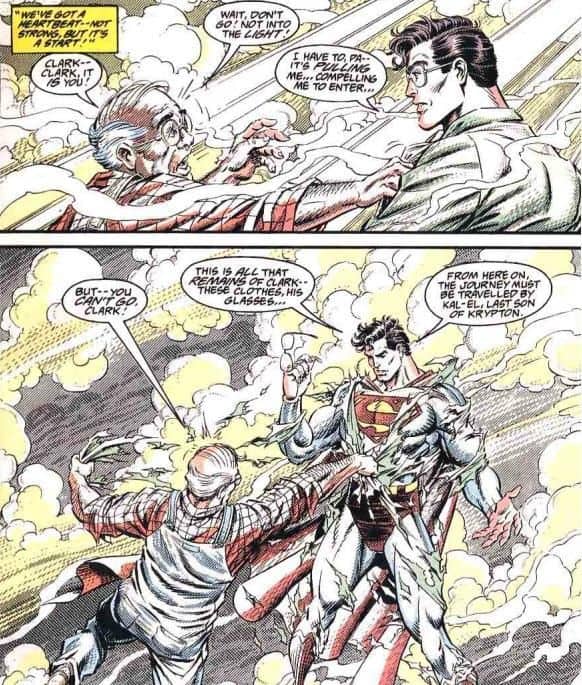
It also includes a story about Jonathan Kent having a heart attack and seeing Superman in Heaven which was from The Adventures of Superman, the deluxe edition of which introduced the four contenders of Reign of the Supermen arguably begins. However, FYI, it's a complete red herring.
2. The Superman Chronicles Vol. 1 & 2: this is the bare essence of Superman and superheroes in general. There are a few other characters who proceeded him that you could call superheroes, but in this volume is what codified the trope, so-to-speak. I also hesitated to--again--recommend two volumes, but the second one has probably the greatest Superman story of the '30s: the one where he takes on an orphanage that's been abusing children.
Oh, we never see Superman fly, and none of his famous foes are anywhere to be seen; but what it lacks in those kinds of stories, it makes up for in social relevance, not just for its influence in comics, but also because of the ills of society against which it pitted Superman.
3. Man of Steel: During my generation, this was the definitive retelling of Superman's origin. That's not to say it was necessarily the "best" but it's what the comics were following at the time, and the TV adaptations of the '90s used it as a source. In the mid-'00s, D.C. reprinted early post-Crisis issues as subsequent volumes of a Man of Steel TPB series, of which I'd recommend Volume 4, which explains how Superboy fit into the post-Crisis era as the inspiration of the Legion of Super Heroes, but only for more hardcore fans. For noobs, let's just stick with this one.
There have been a number of versions of Superman's origin in the comics since: Superman For All Seasons, Birthright, Earth One, Secret Origin and Superman and the Men of Tomorrow, not to mention pre-Crisis versions and the many film & TV adaptations. They mostly brought something to the table, but Man of Steel stands out historically because it made some definitive changes that influenced the mythos for generations. Before, Lex Luthor was always an avowed criminal whereas in Man of Steel, he was reintroduced as what everyone thought was a benevolent philanthropist. In essence, they made him an evil Bruce Wayne. Speaking of Bruce Wayne, the third issue redefined the friendship of Superman and Batman, sadly, as a trumped-up rivalry.
Finally, the decision to spare Jonathan and Martha Kent their deaths was such a radical departure that, when I read the death issue in 1992, I was actually confused to see them alive-and-well having just gotten back into Supes mostly through the movies and my dad's old comics. They've been used to good effect, but lately, most new versions have had Jonathan Kent die before Clark becomes Superman, for better or worse. As well, Lana Lang comes off as more of a central character in Superman's upbringing than just Lois-as-a-ginger.
4. Whatever Happened to the Man of Tomorrow? It came down between this and All Star Superman, but since I'm already recommending the DVD for All-Star, and this two-issue story available as one in prestige format, was intended as the actual ending of the pre-Crisis Superman (sort-of), and as such, they're taking some of the concepts of the prior thirty years and turning it into a tense story, then showing us what life is like for Lois without Superman.
Basically, little by little, thing start going wrong: Bizarro goes crazy, taking out innocent people then killing himself, the Toyman and Prankster invent tiny Superman toys with heat vision which end up unraveling Clark Kent's disguise, and the Daily Planet is taken over by an army of Metallos. And that's just the beginning.
Not to give too much away, but I'd also like to note that this story gives us an early variation of a topic that's been under a lot of scrutiny during this past year: what happens when Superman kills? Again, I don't plan to go into much detail beyond that, but there's a much different outcome from what we've seen recently, and what some fans might agree with.
While the story was never in canon (it was billed as an imaginary story, and anyway, the pre-Crisis continuity was on its way out), it does serve as a fitting end to that period and, dare I say, is the superior of a certain Batman story that also speculated on the hero's final days. The title is also fitting in that, while the Man of Steel miniseries boosted sales in comics, it put a bad taste in some longtime fans' mouths, Superman IV and the first season of Superboy, a very unpopular NES game and even an overrated short-lived animated series turned away fans at the movies and on T.V. It was a dark time for Superman and, sadly, the only way D.C. could revive his popularity… was by killing him.
5. The Death of Superman and The Return of Superman: Okay. In 1992, the Superman books had a saga called Doomsday in which Superman and a big monster called, well, Doomsday… punched each-other to death. The world mourned. Now that you know that… it still might be a little confusing, but it's still the greatest epic of my youth. In Superman's absence, four other beings lay claim to being Superman either cloned, reincarnated or resurrected. Oh, the story has its share of problems, and in some ways the ending might be something of a cop-out. Nevertheless, it had us ten-year-olds guessing and gave the character a much-needed shot in the arm when he needed it the most. The four Supermen are basically commentary on trends of the industry at the time (think of Superman as a ruthless anti-hero, a "hip" teenager, a blacksploitation character, or a cybernetic character) and obviously, should one of them turn out to be a villain, any one of them could be very dangerous, not to give too much away.
There's also a prose version of this called The Death & Life of Superman by Roger Stern, and if you're more into literature, I'd recommend that instead, as it tells you all you need to know about this version of the Man of Steel. But I assume most of you are more into comics, so we'll go into that.
I'd also like to point out that the Supergirl in this saga (and all material from this time) is not the Supergirl we all know and love--Superman's cousin from Argo City--but a synthetic being capable of changing her form and with a miscellaneous set of powers. She went on to have an acclaimed run of comics by Peter David and Gary Frank (back when he was a way better artist) but I just wanted to clear that up in case it was confusing. As well, Lex Luthor had faked his death, and put his brain into the body of a clone, thereby masquerading as his own son. And you thought Superman couldn't do confusing.
Since The Death of Superman is the biggest selling graphic novel of all time, you might prefer to buy it first, as well as the interim story Funeral for a Friend a.k.a. World Without a Superman; but Reign of the Supermen or The Return of Superman is one of the greatest epics to ever be printed in sequential format.
6. Superman and the Men of Steel: the current reboot that the comics are following, it's a bit of a radical departure for the character, but it's more-or-less required reading if you plan to follow the ongoing comics.
Predictably, the individual issues were very controversial when first released, because the character was depicted in a more aggressive manner, as well as being very much an establishment-hating leftist. While this was somewhat annoying, this was very much in keeping with Siegel & Shuster's original version of the character, as depicted in the editions of Superman Chronicles I listed above.
What makes Grant Morrison a great writer for Superman, as I've discovered, is that he realizes that the character has evolved over time, whether he be the leftist scrapper of the Siegel & Shuster era or the omnipotent renaissance man of the Mort Weissenger era.
Also, I'm grateful that they established a version of Superman I could be for Halloween, given my profound lack of pecs and six-pack.
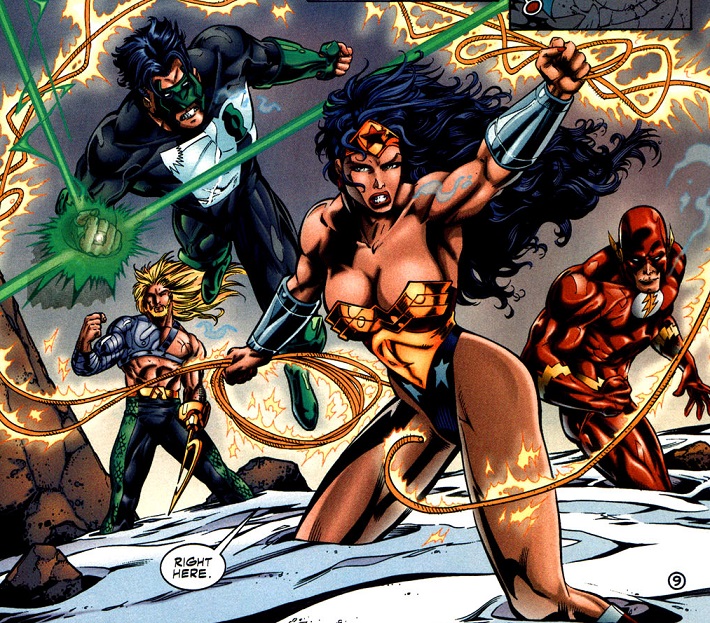
7. JLA: New World Order: Disappointed by Geoff Johns & Jim Lee's 2011 reboot? Well, this is a much thicker story that reestablished the classic JLA line up (albeit, with the '90s versions of the characters) and while it marks the moment where D.C. began portraying Batman as this infallible strategist (at-least in Justice League stories), and he kind-of takes over the story, it still brought the team back properly in the modern era and proved that the League wasn't a relic of the early '60s, but THE ultimate superhero team and each of the seven members represents a trope of the modern superhero team.
While at first, it looks like D.C.'s six-billionth attempt at giving us a story about a team of anti-heroes where the tried-and-true old-timers have to put them down and show them the real way, it's not like that at all. It also manages to make all the members of the team seem meaningful rather than just coming off as a vehicle for Superman or Batman, or even using them to tell the tale of a less-compelling team of b-listers.
8. Showcase Presents Superman Vol. 1: It's popular to take pot-shots at the era known as the silver age, when the books were under the rule of editor Mort Weissenger, but this really was the time during which many of Superman's most fantastic elements were introduced: the Fortress of Solitude, Brainiac, Supergirl.
The kid-friendly, often silly nature of the stories draws scorn from certain fans, but they should be reminded that it's as much a part of the character's history as the more sophisticated stuff. Take it in the right spirit: these comics can't be beat in terms of silly fun.
9. Superman in the '70s: An effective look at Superman in the bronze age. The cover alone (Neal Addams' classic illustration of Superman from Superman Vol. 1 #233 superimposed over a Warholesque background) is worth the price of the book in a used bookstore, and while the greatest story--"Must There Be a Superman"--is already in the Greatest Stories anthology I talked about earlier, but "Make Way for Captain Thunder," (a pastiche of Captain Marvel) and "The Man Who Murdered the Earth," are solid reads, and "Superman Breaks Loose" has its classic epilogue intact, unlike the version seen in the Greatest Stories anthologies. As well, the art is uniformly great and the more stark printing really suits it.
10. Superman in the '80s: 1986 was a pivotal year for Superman. Following the massive Crisis on Infinite Earths storyline, Superman's backstory was altered, and this collection gives us a taste of both the late pre-Crisis Superman and the early post-Crisis Superman. Not surprisingly, the later half is more Earthbound, but the stories all work on an individual level.
The pre-Crisis stories include a two-parter about Jonathan Kent coming back from the dead, and the classic "If Superman Didn't Exist," which follows two young boys named Jerry and Joey creating a character named Superman to inspire others in the midst of an alien invasion.
Meanwhile, the post-Crisis stories include a more down-to-Earth story about Superman after being defeated by a super villain team called the Hive, and having to arrange Ma and Pa Kent's anniversary, while Döppleganger shows Superman facing off against the Matrix from The Supergirl Saga.
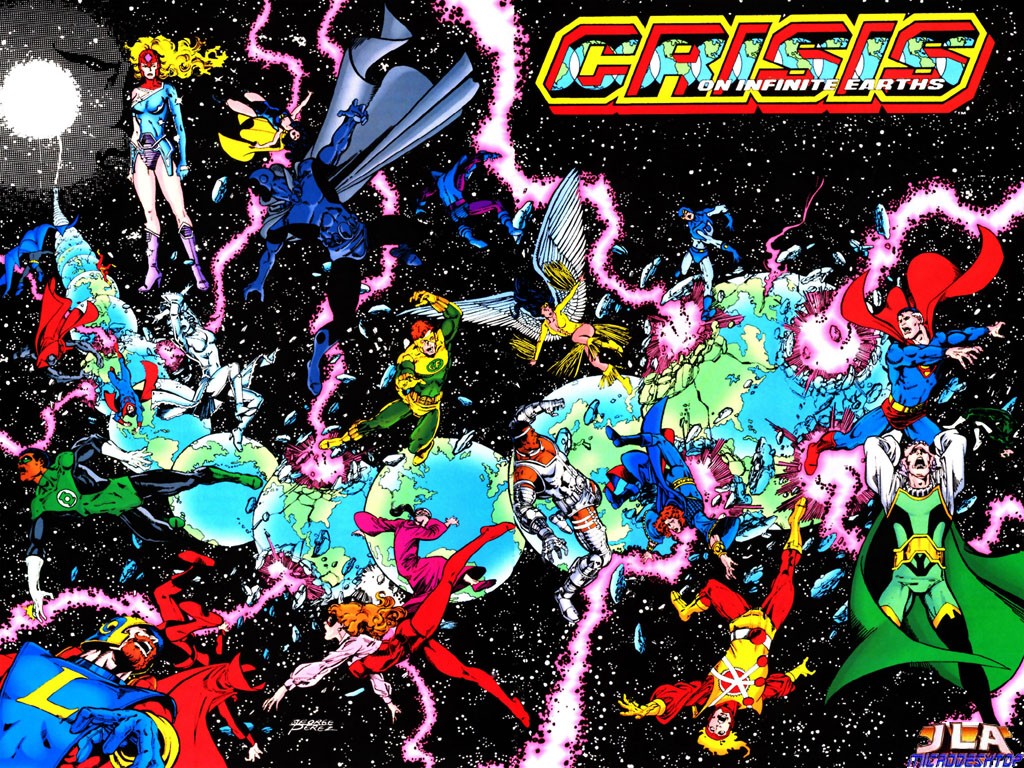
11. Crisis on Infinite Earths: this massive story marked the end of the bronze age and the beginning of the iron age for Superman and for D.C.'s entire stable of superheroes. A powerful being known as the anti-Monitor is destroying a number of parallel Earths while altering the past. While it's never explained exactly how this leads to most of the specific revisions in the backstories of Superman and Batman, it is used as the rationale for them if that makes sense. In other words, it's a big time-travel story, so that's why Clark Kent's parents were younger when they found him and lived into his adult years. As a story, it's very jumbled, but the sheer scope makes it a must-read for any serious scholar of D.C. Comics.
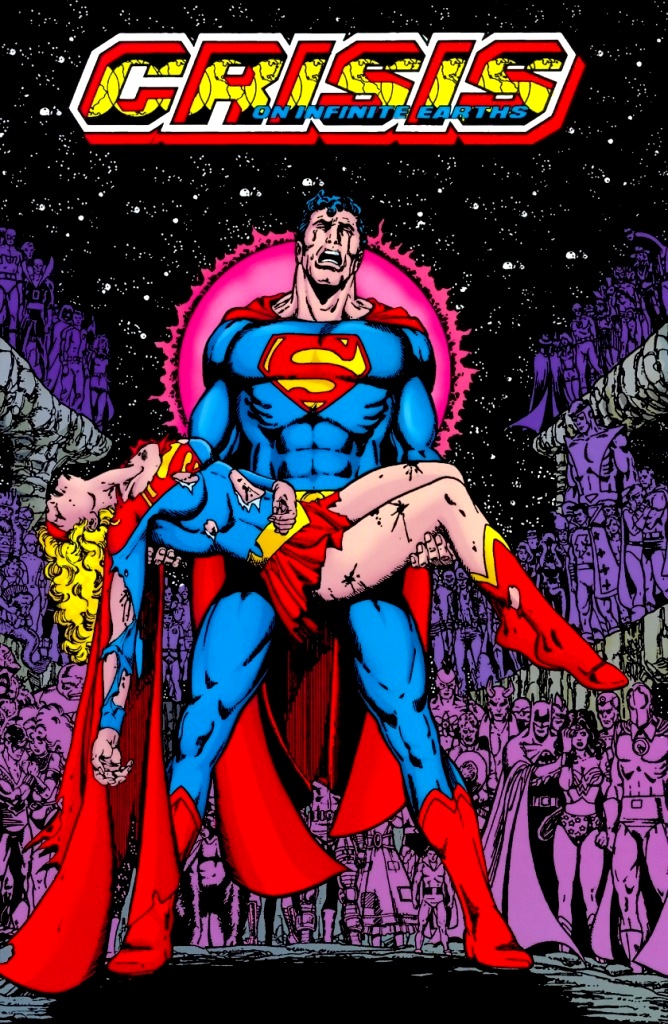
Sadly, a key moment in the book is when Supergirl dies, and yet, in the rebooted D.C. Universe, she never existed to begin with, causing not only story problems, but making it seem pointless to begin with. Still, as Linkara pointed out, it is an example of a well-done death of a superhero rather than the shock deaths Marvel and D.C. eventually got really fond of.
If I'm being honest, 2011's Flashpoint was a much better story, but Superman's part in it was very small and kind-of pathetic. It was a great and pivotal story,however, so I'll include it if I ever do a "greatest Flash stories" blog.
12. Superman/Batman: Public Enemies: With a story by Jeph Loeb and art by Ed McGuinness, the new Superman/Batman series did away with over a decade of, "Superman and Batman can't get along," tomfoolery, and brought back some of the magic of the classic World's Finest. While some aspects of the story are confusing (the "Supergirl" who appears in the story inspired a "where did she come from?" as I had shirked my comic book buying around this time) but there's a certain freshness and newness about this, especially since Jeph Loeb remembers what some writers forget: Superman is supposed to have a sense of humor.
The story comes off as incredibly silly as it goes along, but it's incredibly pivotal as it marks the undoing of President Lex Luthor, and really, when post-millenium D.C. Comics started to come into its own. I say "started" because it's had its bumps along the way, although we will no doubt argue what specifically those "bumps" were.
13. Showcase Presents: Legion of Super Heroes Vol. 1: I'm going to recommend this one mainly to remind everyone that what was once D.C.'s second biggest team--behind New Teen Titans, no less--began as a spin-off of Superman, or rather, Superboy. Yes, back when D.C. ran stories about Superman's early days when he was Superboy, they printed a story about a trio of superheroes visiting him from the future.
I'm gonna be honest and say I didn't exactly give this book my due diligence, but to the extent that I have read it and found the stories to be fun, and that it is a pivotal part of Superman's history, I'd say that it's worth checking out, although if I had a more streamlined, simple issue, I'd probably prefer to recommend that.
14. Kingdom Come: I had mixed feelings about whether or not I wanted to recommend this famous four-issue miniseries cum graphic novel, but I realized that it was a monumental chapter in the character's history. Earlier, I compared Whatever Happened… with The Dark Knight Returns yet this saga is more often considered Superman's equivalent to that story, because it sort-of replaced TDKR as the implied future of the D.C. Universe, until after Infinite Crisis where, not only was it confirmed to have taken place on a parallel Earth, but the Superman of this story became a recurring character in JSA.
What is remarkable about this book is the artwork by Alex Ross, including some of the great redesigns for characters. Red Robin, while an easy name to make fun of, is a design that carried over into the proper D.C. Universe eventually, and the story seemed to bring Power Girl back into popularity. That said, I just never really fell in love with it. At the end of the day, it always felt like another "the old, traditional heroes have to put the more violent new heroes down and teach them the true meaning of Christmas," stories. As well, I really hate the epilogue. Still: as far as influential Superman stories, this is a big one, so check it out.
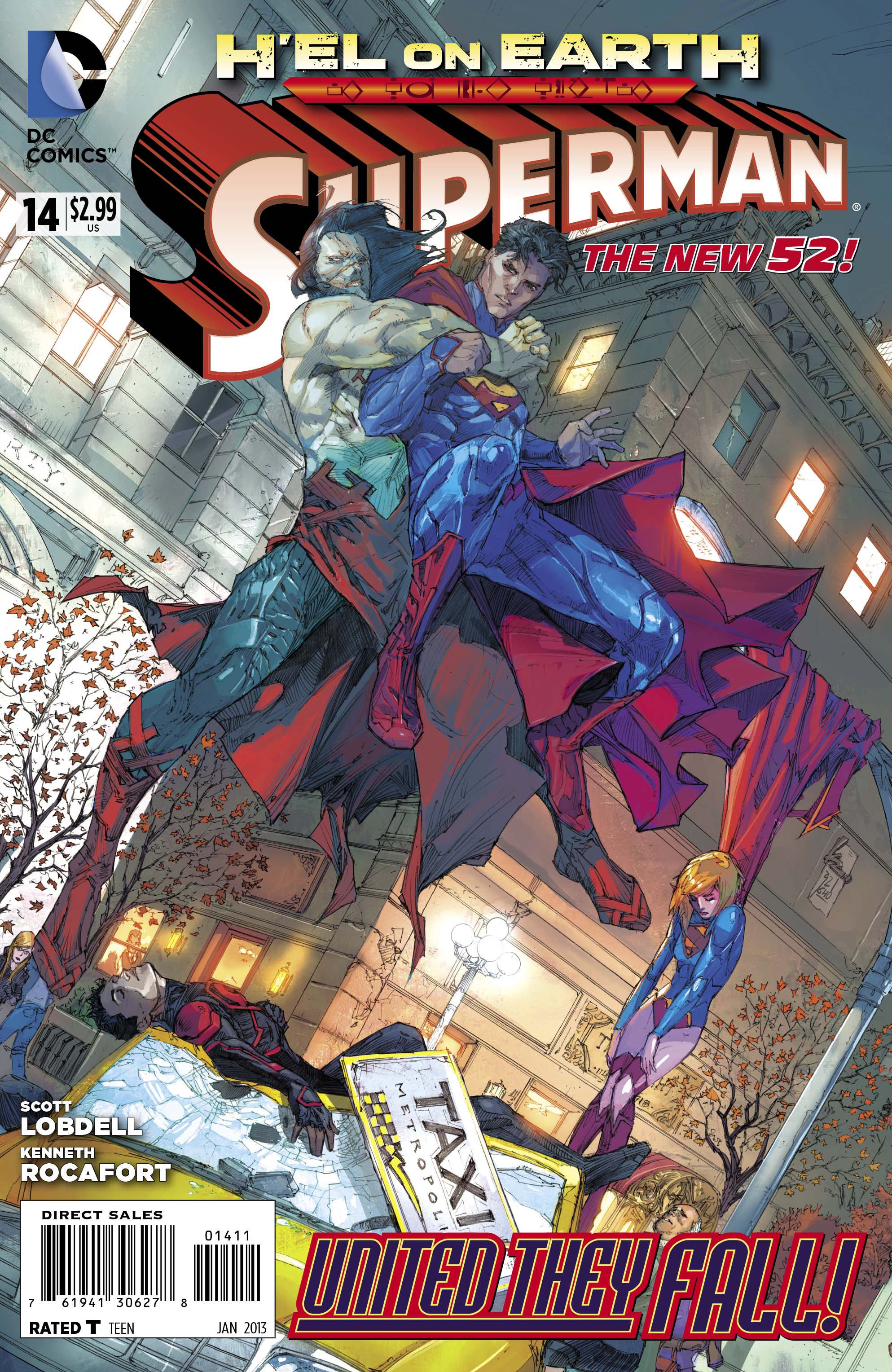
15. H'El On Earth: a recent saga that's a little standard, but shows that there's still life in the old boy yet. A Kryptonian astronaut finds his way onto Earth, and manages to corrupt Supergirl into fighting alongside him against Clark. The saga more-or-less re-establishes Superman's relationship with both her and Superboy, as well as Wonder Woman who is his current love interest as of this writing.
It's also worth noting that after 2011's controversial "renunciation" of Superman's citizenship, that this rebooted, leftist Superman got up and said he believed in truth, justice and the American way and was willing to leave his job to prove it.
H'El on Earth is a bit routine in premise, but it's worth it just to get a taste of the current Superman and see that things aren't as bad as some people say in terms of the quality and tone of the current comics, even if you disagree with some of the choices.
DVDs
1. Superman: the Movie 4-disk set. I recommend the 4-disk set for a number of reasons: first, it has two cuts of the film, and while the extra scenes in the directors cut don't improve much, that print of the film is sharper and more consistent. The theatrical cut has commentary from producers Ilya Salkind and Pierre Spengler, while the directors' cut has commentary from director Richard Donner and screenwriter Tom Mankewitz. It also includes several installments of the Max Fleisher cartoons, the 1951 film Superman & the Mole Men which served as a pilot for his first TV series, and a butt-load of documentaries. This is THE essential first purchase for a budding fan.
Superman: the Movie may not be exactly what you expect from a superhero film. There's no real epic battle, and the film does play more like a biopic than an adventure. It also has a legendarily ridiculous ending. That said: it was one of the most influential films of the '70s.
2. Man of Steel: Superman's latest film was great, and the bargain DVD set has a few documentaries, although the blu-ray has much more in terms of features. I don't have a blu-ray player, so I can't speak to what's on there, but if you do, knock yourself out. I've already defended the film in the first installment of this blog, but I'll reiterate: it's what the character needs now, not because it's "dark," but because it serves as a reminder that Superman is about action and heroism after the lame Superman Returns and the plethora of superhero blockbusters that had been in theaters since, whether they be The Avengers or The Dark Knight. And with the upcoming crossover with Batman on everybody's mind, this is essential viewing. But I can assume that if you're reading this, you've already seen it and are hungry for more, so let's move on.
3. Superman Season 1-3. By this, I mean, the animated series, though it's official title was simply Superman, unlike its sister show Batman: the Animated Series. As with the Greatest Stories thing above, I couldn't pick just one, but the show was so glorious that it is a must-see for anyone who got done with Man of Steel and wants more OR anyone who was a fan from the days of old and wondered what ever happened.
As great as the series was, it wasn't very well-promoted, and that's a shame. It had Tim Daly as the voice of Superman, Dana Delany as the voice of Lois, Clancy Brown as the voice of Lex and a lot more top talent like Brad Garrett, Malcolm McDowell, Mike Farrell, Gilbert Godfrey, Michael Ironside and of course, Kevin Conroy reprising the role of Batman in an epic three-part crossover on Season 2. It's a shame it took Hollywood 17 years to come up with a movie that lived up to these animated exploits, but you must check them out.
Eventually, Darkseid took over as something of a Big Bad for the series, which makes sense. He's pretty much D.C.'s most powerful villain, and the fourth world characters were Jack Kirby's most enduring post-Marvel creations, with the police officer Dan Turpin retooled to resemble the King of Comics.
Whether or not you find this series the equal of its sister show, Superman proved that Superman wasn't some stiff old has been who couldn't be challenged, although it would have had more impact if the show had garnered more viewers.
4. Superman: the Theatrical Serials Collection: I have to give the original Superman his propers, lest the name Kirk Alyn be forgotten. This four-disc set includes both the 1948 serial with a well-done retelling of his origin, then gives us Atom Man Vs Superman, an epic of the atomic age, pitting Superman against Lex Luthor and his armored alter-ego Atom Man.
These serials also mark the first appearance of Noel Neill as Lois Lane (she reclaimed the role in The Adventures of Superman Season 2) and featured Tommy Bond, the original Butch from the Little Rascals series of films (of which future Perry White Jackie Cooper was also an alumnus) as Jimmy Olsen. Finally, Lyle Talbot--also the original Commissioner Gordon and who appeared in a number of Ed Wood films--was the original Lex Luthor and, debatably, still the greatest. Many of the special effects are handled using animation, which is kind-of cheap, and yet, is a clear taproot to the modern CG used in today's blockbusters.
5. Justice League Unlimited Season 1: not to be confused with plain old vanilla Justice League Season 1, this season marks the moment where the show made a huge jump in quality.
While the above clip was from an adaptation of Alan Moore's "For the Man Who Has Everything (Superman Annual 1985 edition), most of the stories here were original, which is good because the arc of the U.S. government setting up a program called Cadmus with the help of Lex Luthor, on the chance that the Justice League ever becomes as dangerous as their other-dimensional counterparts the Justice Lords, lead to what could have been an amazing climax in "Divided We Fall," until Warners decided to produce a tacked-on final season.
6. The Adventures of Superman Seasons 1 & 2: Filmed in glorious black & white, The Adventures of Superman was a cornerstone of the golden age of television, like I Love Lucy or Dragnet. Obviously, the show didn't have the special effects capabilities of later incarnations, and the plots were a little more thin, so an entire boxed set might be overkill for some fans, but if you have iTunes, definitely check out the episodes "Superman on Earth," "No Holds Barred," "Czar of the Underworld," "The Mind Machine," "The Human Bomb," "Crime Wave," "Five Minutes to Doom," "Jet Ace," "The Face and the Voice," and the ever popular, "Panic in the Sky." Later on, the series was produced in color, and the only real recommendations I have are, "The Big Freeze," and "The Perils of Superman," as the color stock came with a radical shift in tone, and not for the better.
George Reeves' died of a gunshot wound two years after the end of the series, and to this day, controversy brews over whether he killed himself, there was a hit on him for one reason or another, or a random burglar happened to shoot him. Nevertheless, his performance as an older, more rough & tumble Superman with an avuncular feel unseen in any Superman since continues to make him a favorite, while Jack Larson's comical performance made him the definitive Jimmy Olsen, and John Hamilton's grouchy curmudgeonly Perry White put him on par with any of the actors who have played the role since.
7. Superboy: Season 3: One of the more obscure outings in Superman's live-action history, Superboy (a.k.a. The Adventures of Superboy) began life as a sort-of holy grail of cheese. If you watch the first few episodes of Season 1, it's beyond amateurish thought it got better as the season progressed. The second season took a turn for the more fantastic, but was still mired in a cheap production that tried to recreate the magic of the earlier films, but be hip at the same time. The third season, however, was different. The visuals, the special effects, the music… everything just became richer, and episodes' plots became more sophisticated. The two-parter "Roads Not Taken" takes a look at two parallel Earths where Superboy had made different choices, leading to an anarchic dystopia and a dictatorial one respectively. It's a true precursor to the Justice Lords thread in the Justice League (Unlimited) series as well as the new game Injustice: Gods Among Us. As well, the episode "Road to Hell" gives us a similar device with Ron Ely of Tarzan fame playing an aging Superman in the future though he's not billed as such.
I haven't seen enough of Season 4 to truly recommend it, but they're all available at the Warner Bros store. Only the first season was ever released in stores, and it failed predictably enough, though I'll admit, I preferred the actor in the first season (John Haymes Newton) to the later one (Gerard Christopher) partly because I met him and he offered some hilarious commentaries with Salkind. The other three seasons don't even have any special features, but check 'em out anyway if you enjoy this season.
8. All-Star Superman: adapted from the 12-issue series of the same name, this epic is an homage to the imaginary stories of the '50s and '60s, with a scope only that version could ever grasp at, yet with a modern-day seriousness and depth that make this an enthralling story. In some peoples' opinion, it was the greatest Superman story ever told. That may be more true than I'd like to admit. Here, Superman learns he hasn't much longer to live and basically sets out on a bucket list, while daring Luthor to accomplish everything he'd ever hoped to had Superman not been around supposedly impeding him.
The animation is what you'd expect, but the music may actually be the best since John Williams' incredible score for the first of the Christopher Reeve films. The film covers an awful lot of ground, from Superman allowing Lois to experience a day with super powers, to battling other Kryptonians, to a climax I'm not going to give away, but let's just say it's what the world seemed to be waiting for.
Oh. For the noobs wondering about the title, well, D.C. put out a line of comics called All-Star, in which they'd planned to have the biggest talent in the comic book industry writing and drawing the books which would take place in their own continuities. While Superman's was a critical and commercial success, Batman's was not as successful critically and was late most of the time, due in part to the scripts being… how can I put this… terrible. A planned Wonder Woman series/GN never materialized as far as I know, and the line seems to have been somewhat replaced by the Earth One original graphic novel series.
9. Smallville: Season 1: I picked up this massive set for $5.00 at Half Price Books. Anyway, this was the seed from which the rest of the series spread, so if you check it out at this early point, that'll tell you whether or not you might want to see more. Besides: while these early episodes have been criticized for being somewhat formulaic "freak of the week," tales, that's true of a lot of shows, and just provides a cool urban fantasy with the premise of "Superman growing up."
I'm also going to recommend a couple of episodes from later seasons. In Season 4, an episode titled "Run" introduced a young Bart Allen as the series' version of the Flash (technically, a version of Impulse who called himself the Flash, but whatever) which heralded the beginning of a number of guest heroes, cumulating in the ever-awesome episode "Absolute Justice" from Season 9, which demonstrated everything good and everything bad about what the show had become. While, yes, it was fun to see several heroes teaming up, but seeing Hawkman and, for crying out loud, Stargirl in full regalia, it was safe to say the series had strayed from what had made it interesting in the beginning.
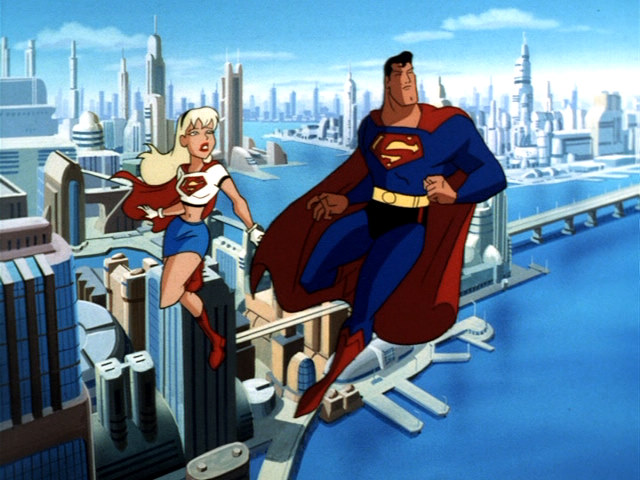
10. Superman Unbound: Despite a title that, well, just doesn't fit: this was another self-contained direct-to-DVD animated film from Warner Bros. When I first saw it, I felt it wasn't much of a story to warrant its own DVD, but taking it for what it was the second time I watched it, I really liked the overall style, and the voice acting. It's interesting to see a Superman in animation that looks more like Christopher Reeve and not a Schwarzenegger-like bodybuilder, and I enjoy the portrayal of Supergirl as a more bitter teenager. Overall, I actually think that if they did an animated series in this style, with this cast and in this continuity then I think that would be awesome, but lately, D.C. animated vehicles have had a short lifespan.
This was based on a saga called Brainiac which I never really read because it looked rather predictable and--well--this is as well. That's why I only put it at #10. I'd also like to point out that there were a lot of direct-to-DVD animated films: Superman: Doomsday, Justice League: New Frontier, Superman/Batman: Public Enemies, Justice League: Crisis on Earths 1 & 2, Superman/Batman: Apockolypse and Superman Vs the Elite, but this one won out mainly on style. I'd already recommended PE in graphic novel form and Vs the Elite is also based on something that can be found in one of the Greatest Stories compilations.
I'd also like to say that I wish I'd have been able to recommend Lois & Clark: the New Adventures of Superman, a series that ran on primetime on ABC from 1993 to 1997. If you have iTunes, I'll recommend the episodes "Flyhard," "Vatman," "All Shook Up" (a remake of the 1954 episode "Panic in the Sky") "Metallo," "Big Girls Don't Fly" (Superman Vs Roger Daltry) and the first two episodes of season 4. All-around, it was an incredibly cheesy show and the cast deserved better, but it had its moments.
Now, again, the 4-disk set of Superman: the Movie contains some of the '40s cartoons (as does the 2-disk set of Superman II from 2006), and they're available in a number of cheap formats, since they're public domain, but I figured… why wait?
Disclaimer: in the past, I've had a blog focused on my artwork. This is not such a blog, as I've more-or-less given up on that, and have decided to focus on this blog. No artwork is mine unless explicitly stated, and upon finding information about photographers, I will include that.
Ladies and gentlemen, Welcome to the inaugural installment of my brand new comic book blog. The two or three of you who've read my blog on my own website might be wondering why I didn't post more often, and the reason is that I really didn't have much direction. I also tried to start a podcast, but it just wasn't coming together. This time, I have a more concrete idea: to share my thoughts on comic books and, to a lesser extent, movies and TV shows, especially ones based on comics. And what better way to start than with the most important character in the history of comics? Yes, this is a Superman-centric comic book blog. If you don't like that... just go. That being the case, I am going to talk about the most divisive thing to happen to Superman in... well, two years. Seriously, fellow fans, don't we have the most broken base in all of fandom? Well, in any case, I'm here to talk about why I loved Man of Steel, and why I--as with many fans, but I can only speak for myself--have been so emotional about it. Long story short, I feel like many of us fans had a hand in making it. Oh, we weren't on the set, rolling gaffer tape or lighting the actors; but I feel that without us, Warners would have either made a terrible film as a sequel to Superman Returns... or no film at all. Before I begin, though, I'd just like to say that I know some people are going to be annoyed, or even insulted, by my sounding like I'm trying to read peoples' minds. Yes, I admit it's condescending. But I also think it's important to show that I have an understanding of where I think people are coming from, and to be honest that I think that a lot of old-time fans simply aren't being fair. Admittedly, many of the people who do like MoS are the irritating "highbrows" (note: we're using TV Tropes terminology here) and have an attitude about everything before 1986 (the year of a particularly significant reboot in the comics) just sucks, with the possible exception of things from the Golden Age because the early stories had more of an edge to them.
Truth, Justice and All That Stuff... In 2004, Warner Bros announced that Bryan Singer, hot off the success of the first two X-Men movies, would be throwing his hat into a long list of directors who had been involved in making a Superman film. Tim Burton, McG, Brett Ratner and even Oliver Stone had all been courted to helm a new Superman film while writers such as Cary Bates, Kevin Smith, J.J. Abrams and others had written screenplays which have since leaked all over the internet. Long story short, it went from a sequel to the Christopher Reeve films (possibly starring Gerard Christopher of Superboy fame) to a Batman rip-off starring Nicholas Cage loosely based on the death & return saga from the comics (and with unfathomable alterations to the costume) to a reboot that was trying too hard to be The Phantom Menace and The Matrix all rolled into one, though not without the Superman magic.
That magic was what fandom expected more and more as the making of Superman Returns got under way. Singer was constantly talking about how much he loved the first film at a time when its influence was being felt thanks to Smallville and the Spider-Man films. Unknown Brandon Routh was cast in the leading role based on his resemblance to Christopher Reeve, who had passed away around the time the project began. My excitement reached a pitch when it was announced that it would follow the first two films, although I felt it was a little cheap to ignore the third-and-fourth films even if they were so unpopular. Also, as we would learn, it would be in broad strokes and in comic book time. But anyway, the first two X-Men films were great and DC's other tentpole Batman Begins was awesome, so this would be great, right?
When I first saw the image above, the John Williams Superman theme started playing, but then the trumpet section fell out of breath. Oh, it wasn't any less faithful than Tobey Maguire's Spider-Man costume. All the elements were basically there. But just look at them. The S is too small, the red is too dark and muted, the neck-line looks too hoighty-toighty, the boots are just ugly, and I don't know what's going on with the belt and the trunks. It looks more like a speedo, and while I couldn't see it in this image, how could they take the S off the back of the cape (which makes him look less generic) and yet put it on his belt buckle like a prize from a box of cereal?
But anyway, what's important is the story, right? After-all, aren't you tired of superhero films that are all action and no plot? It was going to focus on the romance, which after the earlier Superman films, the first two Spider-Man films and even Daredevil... was one of those things that isn't original, but people talk about it like it is. In a nutshell, this was the premise of Superman Returns: Superman catches wind that Krypton might not have blown up. He travels there just to check it out, and returns to Earth after five years have passed and without him, life on Earth... is pretty much what it was before. Seriously, the promotion for the film promised they'd explore a world without Superman. But since we DO live on a world without Superman, what's the point? 9/11 happened? There's war? Yup, things are pretty much the same except for Lois who has moved on with a son and a fiancé and is angry enough with him to write an opinion piece about how the world doesn't need Superman. After-all, it's not like he saved her from a helicopter accident, being killed in the aftermath of an attack on the San Andres Fault, and a terror attack on the Eiffel Tower. So why the ingratitude? Well, he left without saying goodbye. Here's the thing: I really don't know how to feel about that. After-all, him leaving and not telling her (because it would be "too painful," he being such a noble hero) is a dick move, but to be fair, did it ever cross her mind that he was in some sort of danger from a possible secret mission in space? Whatever, throughout the course of the film, we have to sympathize with Superman because the only woman he ever loved for some reason, has moved on to find a guy who seems nice enough, and while that goes unresolved, we also learn he's the real father of Lois' son. THIS is our Superman, folks: this is the "oh, thank God they didn't turn him into an anti-hero or he'd be a bad role-model," we've been waiting for. Someone to say, "if you had a kid you didn't know about, it's okay, Superman made the same mistake," and, "if something's too painful for you on an emotional level, it's not worth doing." Now, to this day, fans are trying to defend the film and they always say, "look, Superman made that big speech at the end, so he's totally going to watch over Jason." Ignoring the rumored script for the sequel (which REALLY doesn't help their position), all Superman did was make a speech about how he plans to watch over Jason... which is what he's supposed to do for everyone. Really, that's as specific as it gets, and unless the next film started immediately after this manipulative scene ended (highly unlikely), it would by definition make him a deadbeat dad, even if the predictable ending of the two of them ending up as a couple raising Jason did eventually take place. Oh, and I almost forgot: there was some story in the movie about how Lex was going to use Superman's crystals to cover the con... you know, it's really too stupid. So Now What? It's hard to describe how broken the base was after Superman Returns. In a more convenient world, that film with the undesirable ending would have been the "darker and edgier" one, so Hollywood could roll up its sleeves and make a film that was so vibrant and uplifting that fans would flock to see it. Sadly, since Singer was at-least trying to make a film that was, at once, joyous and intellectual and where we're supposed to think of Superman as not especially noble, but a Christ-like figure; it was hard to explain to people that this film pissed me--and I'm not alone--off because they had portrayed him in a way many fans found offensive. The typical Singer-Puppet accused me of wanting a film with nothing but action. I wasn't alone, however Warner Bros did not seem to be happy with the box office figures either. The film was budgeted at a staggering $270 million, and while this figure may have included earlier incarnations of the project, the fact was that a worldwide gross of under $400 million, with just over $200 million coming from the U.S. wherein it was one of the slowest films to reach that all-important figure (the distributor gets a smaller share of ticket sales with each passing week) it was a disappointment. Now, to follow what I'm about to say, I am asking for a conceit: that film studios DO look at what fans have to say. Yes, they are going to make changes to the source material to make it more commercial, and yes, different fans are going to have different things to say about it; but it's clear that after a certain Bat-bomb in 1997, movie studios--least of all, Warner Bros--cannot just simply say, "eff the fans, we know what we're doing," and while there will never be a perfect translation of any comic book--especially with Superman and Batman who have been rebooted so many times in the comics alone and had many influential outings on TV and in earlier films--if enough fans can agree on a certain sentiment, it will be heard and considered. This was our opportunity as a fandom to say, "look, Warner Bros., this didn't go as well as you'd hoped, did it? Now, what you're gonna do is go back to the drawing board, and give us a new Superman. If you do, we will give you some dinero. If not, you'll have squandered the most important fictional character of the 20th century." Unfortunately, while they seemed to have gotten the memo by August of 2008 (the summer of The Dark Knight and Iron Man), with Warners CEO Jeff Robinov saying, "we're going to try to go dark to the extent that the characters allow it," which is a relatively generic thing to say, but at that very moment, the internet was abuzz about a "dark" Superman reboot. Whatever "dark" meant. To make a long story short, the problem with Superman Returns was somewhat misdiagnosed. To me, and I don't think I'm alone, the problem wasn't that it wasn't "dark" enough, but that in a manner of speaking, it was "too dark." But I also know that some people didn't see it that way. One thing we could all agree on was that Superman Returns could have at-least used some more action. Sadly, another lesson people took from it was that was that the earlier films were somewhat "dated," and that while I think we can all agree that quoting so many lines from Superman: the Movie was overwrought, I for one don't think it was that approach that failed Superman Returns, however, trying that approach again would not be easy to market. Simply put: the feeling was that they had to start over. Enter Nolan After a year-and-a-half of speculation, it was announced that Christopher Nolan would produce the new Superman film and it wasn't long before David Goyer and Josh Nolan were announced as the writers. For many fans, this was the shot in the arm we'd been waiting for, but for the unfortunate onlookers, it was another reason to fear a "dark reboot." Why? Because Chris Nolan's Batman films were seen as the preeminent "dark" superhero movies, and because... let's face it... most people who talk about films on the internet seem to be under the impression that a given filmmaker is some sort of "tone machine," and that he would only be capable of making a film that was identical to The Dark Knight, which despite its acclaim, was easily as "dark" as Tim Burton's Batman films, and when he was on the project, we know he had a lot of terrible ideas up his sleeve. Sadly, people neglected to see that the reason The Dark Knight was so successful wasn't just that it was "dark" but because it was a great suspense thriller. Nope. He brought whiskey onto the playground, and while that's great for Batman, it's wrong to do it with Superman. Let the posturing begin. Meanwhile, in fandom, we Superman fans began asking ourselves some intense questions. What is tone? Why is it so important? Is it more important that the film isn't "dark," or that the character himself isn't? How do you even define or quantify "dark?" Couldn't we use the D-word to describe some key storylines? Like Doomsday and Reign of the Supermen? Or Kingdom Come? Or even some episodes of The Adventures of Superman like "Czar of the Underworld," or, "Mystery in Wax?"
Soon enough, announcements were being made: Nolan had a shortlist of directors including Tony Scott, Matt Reeves, Jonathan Liebesman, Duncan Jones and his eventual choice, Zack Snyder. I really wasn't happy at first, because Snyder had said something about him not being able to see Superman in a "modern context," but then I thought, well, Bruce Timm has said a lot worse, and the animated series he'd directed was still great, so what's really important is what's on screen.
I held my breath as I waited for more announcements, and after a while, they were coming at us thick and fast... and a bunch of self-styled purists, eager to stake their claim their title as the greatest of the elite, couldn't keep their mouths shut.
The Bitch Is Back
First off, Zack Snyder wasn't exactly the most popular director in Hollywood. His adaptations of Dawn of the Dead and 300 were successful enough, but his Watchmen movie (based on one of the most revered miniseries' in comic book history) was controversial to say the least, and his magnum opus Sucker Punch was universally decried. Still, the casting of Kevin Costner as Jonathan Kent was inspired, and since Henry Cavill was a fan-favorite, you'd think he'd be praised, right?
Nope. Suddenly, people were complaining about a British actor playing an American Icon. Yup. How dare they cast a man from another country as a man from another planet? And it only got worse from there. Amy Adams as Lois Lane? Too perky. Russell Crowe as Jor-El? I don't know what their beef was. Lawrence Fishburne as Perry White? Yes, people decried him because he was black. Now I'm not going to accuse them of racism, but I do think that when we're talking about a respected actor of the same body-type, it's okay if his skin is a little darker. Then, there was the announcement that Michael Shannon was the main villain: one General Zod. Welp, the same people who had complained about how this wasn't similar enough to the earlier films were now complaining that the villain who was mainly important for being the enemy in Superman II was the villain here instead of someone who hadn't graced the silver screen before (e.g. Brainiac, Metallo, Parasite, Bizarro, Darkseid, Doomsday, etc.) and many of those who had clamored for a reboot were right with them.
Admission: when I first saw this costume, I didn't notice the bracelets or other details, and I couldn't tell whether or not he was wearing the trunks. Furthermore, it looked like he was wearing a black belt, which I'd have been fine with. In a sense, this costume told us a lot... without telling us much at all. In the meantime, the comics had rebooted the characters (or were about to, I'm a little fuzzy on the dates) and a new costume had surfaced for the character with a more aggressive attitude and certain political bent. I'm actually NOT going to get into the "New 52" here, except to say that I really hope DC stops calling it that.
Anyway, I could walk you through every little development along the road, but the point here is that it seemed like no matter what they did, people were convinced that this was going to be some sort of "grim & gritty" attempt to "make Superman dark," and that this movie about a man from another planet who can fly and see through walls would be "too realistic."
So What's So Great About Man of Steel?
Basically... the same thing that was great about the rest of the Superman canon. If I were to sell it to a longtime fan, I'd say that yes, it's the familiar origin, but with more depth and better special effects than anything since, or even including, Superman: the Movie. Henry Cavill was the greatest Superman since Christopher Reeve, that Amy Adams is the best Lois since Teri Hatcher, that Russell Crowe is the greatest Jor-El ever, and even the changes to the mythos were interesting. To non-fans (not haters, but just casual viewers, eff the haters), I'd say that it's a science fiction epic about first contact, and what someone might do if they found out there's an alien... and there's a lot of pulse-pounding action.
This movie may have a darker tone, but it's nothing like some people made it out to be. It's not "gritty" except for the scenes of young Clark being bullied (which were somewhat intense) and for everything people were worried about, Clark is not an anti-hero, except in the classical sense of lacking some of the traits of a hero. Some might say they're turning him more into Spider-Man, plagued with self-doubt, but all that means is that they're using outside influence to find a new light on something that was already there.
Finally, as I go through the various complaints with this film, I want to say that while I'd have been up for a nostalgic, bolder-than-a-rainbow Superman film that tried to be more like the Iron Man films or whatever people were expecting, it is its own take. Any exploit of any long-running superhero, will only ever be someone's own take. The two youngsters who created the character are long gone, and their original Superman was tamed within a few years. Ironically, the people who hate this film for trying to go for any "dark" or "modern" trends are forgetting that the early stories were "dark" and that the Superman they tend to favor IS a modernization. The unflappable, all-powerful Superman of the '40s and '50s was a product of the atomic age. In my heart, I love those stories, but I also know that the character's past can only be preserved with an eye on the future, as that's what they did back then.
For that matter, where would the great Christopher Reeve have been if his films weren't in an arms race of special effects with the Star Wars pictures?
Anyway, the best way to defend Man of Steel is to start at the end and work our way back, so let's do this.
Superman snaps Zod's neck... killing him! How can you possibly defend that!?!
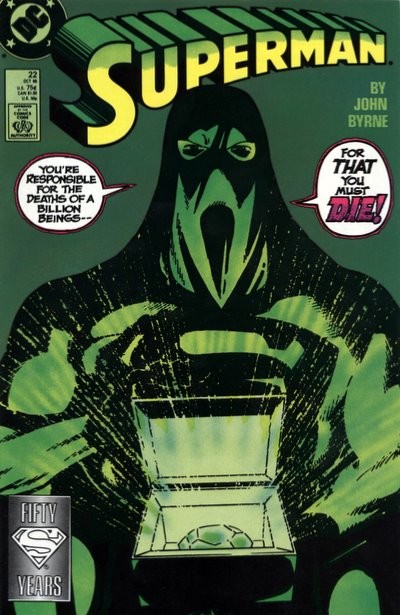
In 1988, writer/artist John Byrne had wrapped up his two year run on the character (which began with a reboot called, yes, Man of Steel) in a story entitled The Supergirl Saga. Explaining the ins-and-outs of that story would be beyond the scope but it ends with a story in which Superman kills General Zod and two other Kryptonian villains.
Now, by itself, this might not have been enough to justify it. After-all, the events leading up to the killing of Zod, and the nature of the killing itself, weren't especially similar to this three-part story. And yet, because what took place in this story was an execution, rather than a snap-judgement with people in immediate danger like in the film itself, the film version is even more justified. Also, as in the comics, Superman shows great remorse, so at the very least, this isn't just, "¡Hasta la vista... baby!" this is a moment he regrets, despite it being necessary to protect other lives. Even that might be somewhat impeachable as the writers could have put him in some completely different scenario, however this wasn't just any comic, but a very pivotal one, whose effects spawned even more important events in what's known as the "From Crisis to Crisis" era.
Despite what some utterly ignorant people have claimed, this was not an attempt to make Superman "hip" by killing a bad guy, but a direct reference to a monumental moment in the character's history.
What about the destruction of Metropolis during the fight?
Well, for one thing, it's not like Superman flew into these buildings just for shit and giggles, General Zod was punching him into them. But at the risk of pointing at bad behavior to justify more bad behavior, this is such an obvious double-standard. This sort of thing happens in an action movie. Buildings get destroyed, and you just gotta say, "welp, I hope it was Sunday so everyone was at home praying."
Then there's the charge that there weren't enough scenes of Superman saving people, there's really two ways to address this. On a pragmatic level, Superman is in mortal combat with the most powerful supervillain in the universe. He has to keep fighting back, nobody else can. Hopefully, emergency response and the military are getting people the help they need. On a more thematic level, well, there's a shot of Superman saving a military pilot from a helicopter. This is to remind us all that he's not just there to punch bad guys, and while you may not feel it was enough, don't tell me that they didn't even attempt to show that side of him.
Why didn't Martha...
If we're to take some peoples' complaints at face value, they seem to want a scene where Martha and Clark rebuild the Kent home brick by brick. To be fair, it shouldn't be a task for Clark, and I'll have to review the DVD sometime to see if they did, indeed, not fix it while Clark was trying to figure out a new vocation.
And yes, it's contrived that he became a "stringer" at a bigtime newspaper without any apparent journalistic education or experience. I'm not sure about Smallville, but as far as I know, the only live-action version that had a really convincing account of how Clark ended up at the Daily Planet was Lois & Clark.
The Codex thing was hard to follow, and so was the hologram of Jor-El.
I agree, the Codex was--as McGuffins go--hard to follow. I also think it would have been better if the Jor-El hologram had an effect on it to remind us that it is a hologram, and I think they could have done so without being too derivative of the earlier films. It does get confusing. I won't argue.
That said, if you can't agree that Lois Lane--played by Amy Adams--running around a space ship with a ray gun is awesome, you can take the purist attitude and stick it in your ear! Incidentally, I do wish they'd dyed her hair black, or at-least a darker shade of red, but whatever, she had red hair in the comics during the '90s...
Superman should have sought Jor-El's advice instead of going to some random priest.
First, for all we know, he's an exceptional priest. Second, he wasn't consulting him for some sort of strategy, he wanted moral advice. He wasn't sure what to do, and while the priest didn't seem all that helpful ("what does your gut tell you?") I'm not really sure that he didn't consult Jor-El or that he would have told him to do something he didn't already do.
I'll recheck when I get a chance to watch the DVD, but let's face it: I doubt that Jor-El--who ends up being re-killed--would have had all the answers anyway.
The costume... how could they change something so iconic?
I agree that this is an incredibly iconic costume.
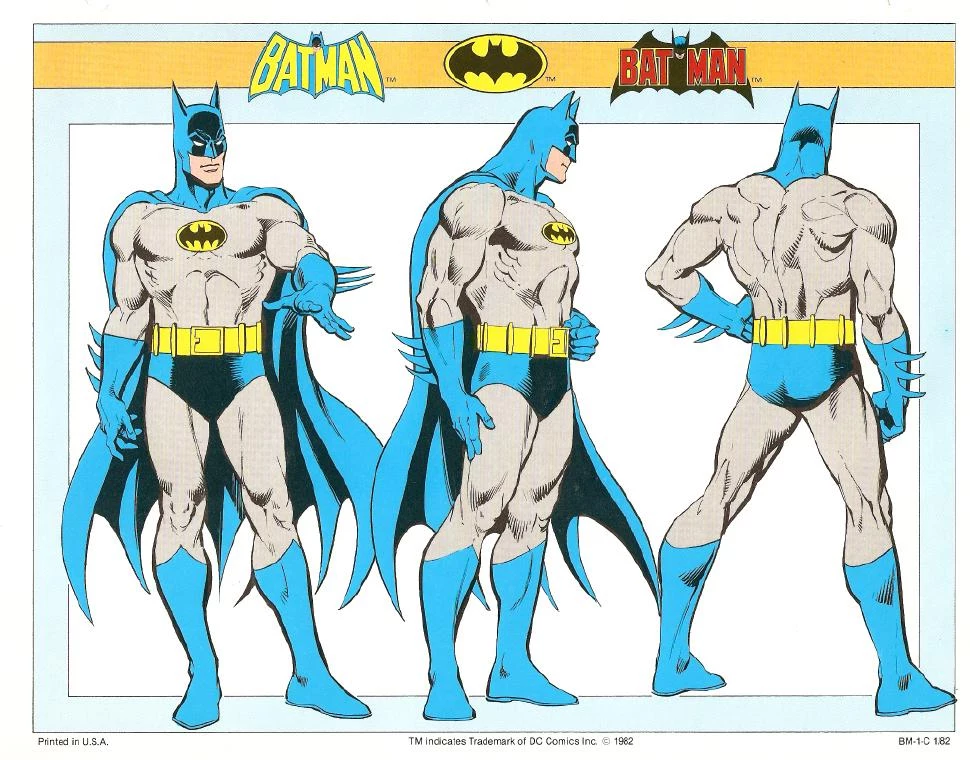
And yet, with each film, costume designers veer further away from that design with Batman. And yet, in almost all of these designs, and yet, they're still Batman...
What the alterations have done is make us look at what makes Batman who he is. What are the basics of the costume that make it so identifiable? When we can distill that, we understand what makes the costume so "iconic" and so it is with Superman.
Between the New 52, Man of Steel, Injustice and even Superman: Earth One, what does not get changed reminds us of what makes the character an "icon" that's so well-known. Even though the "underwear on the outside" is a part of the classic Batman design, it was jettisoned in the movies, and eventually Warners realized they had to do so with Superman as well. The important elements are still there: the red cape, boots and S atop a blue bodysuit.
And if you want to say it's too dark, fine, I won't argue, but it's not the first time.
They fundamentally changed the relationship between Lois & Clark
And that is true. However, this is another example of "my Superman vs your Superman." By the time I started reading the comics with even a mild regularity, she knew Superman and Clark Kent were one-in-the-same. Of course, it didn't start out that way. In fact, he only revealed his true identity after they were engaged. However, I think that because so many people found it a bridge too far that this ace reporter couldn't tell that her own co-worker was really this powerful figure she had a crush on, I think they made the right decision. It just all kind-of adds up.
Everything about Jonathan Kent was wrong.
Well... that's a tough one. In Superman: the Movie, they make a meal out of how, "all these powers... and I couldn't even save him." Yes, Jonathan's callousness about the other kids on the bus was out of character. They'd basically changed him from someone trying to inspire altruism to someone fearful of what will happen if they find out about Clark. However, it's not completely without precedent. I will agree that the death scene itself is somewhat contrived and they could have filmed it better.
As for those of you who think that the wonderful thing about Superman is that he doesn't have a particular motivation, but just does good for goodness' sake, well, I won't argue with you, but it was a major bone of contention with some other fans (especially on imdb) that there was no such motivating factor, so my question is, is it really so wrong?
Okay, at one point, he trashes a guy's truck for bullying him.
Well, first, he wasn't just bullying him, he was also harassing a waitress. But also, this isn't the first time Superman's gotten petty revenge on a bully. Heck, a bully character was introduced--Steve Lombard (who appears in the movie, but doesn't bully Clark, ironically enough)--to allow Clark to pull pranks on him, which you can see in the animated films Superman: Unbound and All-Star Superman or read most comics from the '70s.
Plus, at the end of Superman II, he basically assaults a guy in a diner who had beaten in up back when he didn't have his powers. Here, he just broke his truck. "What if there was a kid inside taking a nap..." oh, go to Hell.
There's a part where he has a beard and trying to look all scary...
No, he's not trying to look scary. Listen, in most comic versions, there's a time when Superman doesn't have his costume, and solves some problem in plain clothes. That's what we've got here. Yes, he'll have his red & blue costume, but in the meantime, here he is before he gets it. He's still saving people from a horrible disaster.
Krypton...
Yes, they changed Krypton drastically from what it had been in the Christopher Reeve movies. But do you really want a history lesson on the planet Krypton? At every point before the films came out, Krypton was supposed to resemble this futuristic wonder world like in an old Flash Gordon serial and it stayed that way even after the film came out. In the 1986 reboot, it was reimagined as this cold, anticeptic world from which this film took some cues, but it was still a far cry from the ice planet with magic crystals of the Christopher Reeve movies. That never entered the comics until the 2006 reboot, which tried to incorporate elements of the Christopher Reeve movies.
Every version of Krypton has been different, and this was just another example. What works and what doesn't is subjective, but the important thing is for it to appear technologically advanced enough to support a rocket that can travel a few galaxies away.
Finally, the tone of the film is just too dark...
...and yet, isn't there a certain amount of subjectivity? Look: there is more to Superman than the blazing trumpets of John Williams and the million dollar smile of Christopher Reeve, and while those films could hardly be considered dark (except for maaaaaaaaayyyyyyyyybe the fourth one, relatively speaking) they weren't a two-hour long pep rally either.
What Superman Returns taught me, in all its manipulative glory, is that tone is neither that important nor easy to pin down. You can have a sociopathic killer as your protagonist in a light-hearted movie (The Spy Who Loved Me) and a more compassionate, basically good protagonist in a dark and scary movie (Halloween). The tone of a horror movie can actually be pretty light (Jaws) and an incredibly dark and sinister film can have a hopeful message (Terminator). Superman fandom cannot continue to make everything about light and dark, especially when the character is becoming "the other guy" to Batman whose made a fortune for Warner Bros off of "darker" material, even though his credentials as an anti-hero are a bit inflated.
Some fans (young and old) love to put their hands on their hips and say, "today, everything has to be so dark and gloomy just to make a buck, whereas in the days of Christopher Reeve, a delightful and whimsical film could still make everyone happy and that's the way things ought to be," but the Marvel Studios films and for that matter, J.J. Abrams Star Trek films are acorns of the Christopher Reeve Superman films that haven't fallen too far from the tree. Meanwhile, films like Avatar and The Hunger Games may be somewhat "dark" but that's not exactly the first word that comes to mind, and that's about where I'd put this movie.
As for the idea that the film is "too realistic," not only is it still basically a sci-fi/fantasy film at heart, but this is the first time anyone has ever criticized realism in films. No really, find another example of that.
The idea they're trying to convey is that they've tried too hard to make Man of Steel out to be a clone of Chris Nolan's Batman films, but they're way off. People keep talking about them making him a "vigilante" but he had no choice but to fight of Zod's forces, and in the meantime, he never deals with street crime, which makes a vigilante a vigilante: a tag you'd have an easier time trying to pin on George Reeves in the '50s.
However, both Man of Steel and The Dark Knight do have something in common, which is that in each case, the hero kills a major villain. But again, both of them mirror the issue I talked about earlier, which is to say, in both cases, it was done with extreme reluctance and there were major consequences for the hero.
Man of Steel is not without its problems. There are times when Snyder's direction isn't tight enough, and there are times when important elements are almost lost (such as when Clark overhears some soldiers talking about the Canadian outpost he ends up traveling to) but for the shit storm the film had to put up with, it's still a great film.
It's a lot more entertaining than you may have been lead to believe. I'm tired of all of these artificial notions of what Superman can and can't be. The Superman of this film isn't a drunk or a womanizer or a cold-blooded killer. This Superman may have had a face-lift, but he's steeped in the traditions of the character, even if the last Superman-outing made Warner Bros. a little gun shy about laying on the homages.


 In a sense, Infinite Crisis had brought back the pre-Crisis Superman with some post-Crisis mollifications. Minor supporting characters from pre-and-post Crisis reappeared almost obligatorily and, in perhaps one of the strangest ideas, Gary Frank began drawing Superman with an unmistakable likeness to Christopher Reeve. This despite many fans' clamoring for a reboot after the disappointing Superman Returns which similarly attempted to tie itself to the earlier films.